Pilates for Beginners: Mat vs Reformer and What a Class Is Like
New to Pilates? Compare mat and reformer classes, learn the core principles and common beginner exercises, and find out what a first class is really like.
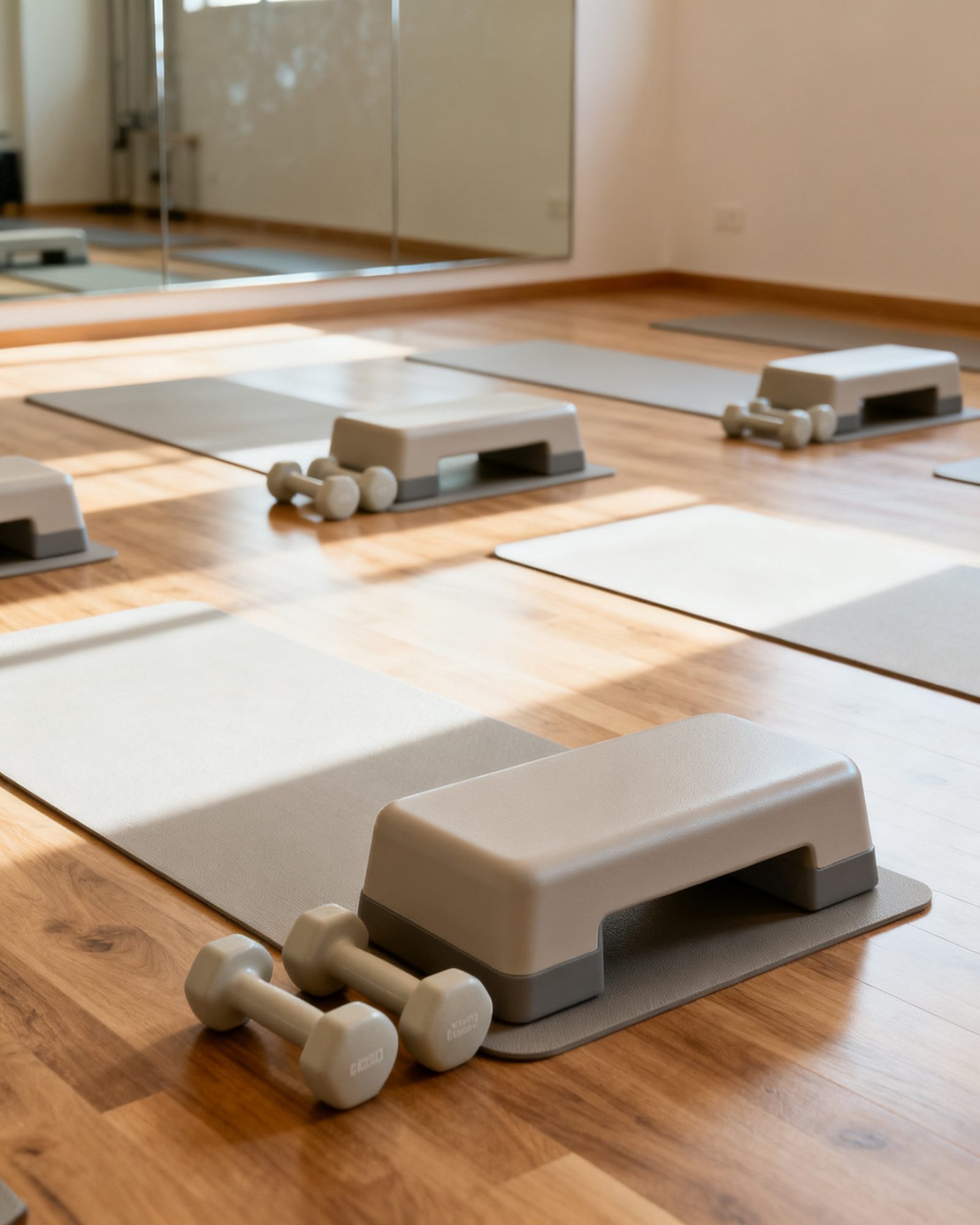
Pilates is a method of controlled exercise that focuses on the deep abdominal and back muscles, posture, breathing and control. It was developed by Joseph Pilates. For beginners, the two main ways to try it are mat Pilates, done on a mat with your own bodyweight, and reformer Pilates, done on a spring-loaded sliding machine called a reformer. Both teach the same principles; they differ in support, feedback and cost. This guide explains what happens in a class, how to prepare, and how to make the work easier or harder.
What Pilates is and where it comes from
Pilates is a method of controlled exercises focused on the deep abdominal and back muscles, posture, breathing and control, developed by Joseph Pilates. It is not a fast workout. The pace is deliberate, and the quality of each movement matters more than the number of repetitions. You will hear instructions about alignment, breath and keeping the movement smooth. The work is low-impact and can be adjusted for most beginners.
Mat versus reformer: a comparison
| Feature | Mat Pilates | Reformer Pilates |
|---|---|---|
| Equipment | A mat and your own bodyweight | A spring-loaded sliding machine called a reformer |
| Support | The floor gives you a stable base | The machine supports and guides you; springs add resistance or assistance |
| Feedback | You feel your own alignment | The moving carriage and springs make wobbling or rushing easier to notice |
| Cost and access | Lower cost; can be done at home | Usually studio-based and more expensive |
| Best for | Learning the principles with minimal equipment | Beginners who want support and guided resistance |
Both are beginner-friendly. Mat classes are easier to fit into a home routine. Reformer classes give more external feedback, which some beginners find helpful for learning alignment. Neither is better; the right choice depends on your budget, access and how you like to learn.
The core principles: breathing, control, alignment
Every Pilates class returns to a few principles:
- Breathing. You breathe in to prepare and out during the effort. The breath helps you control the movement and avoid holding your breath.
- Control. Movements are slow and deliberate. You do not swing or use momentum.
- Alignment. The instructor cues the position of your spine, pelvis, ribs and shoulders. Good alignment makes the exercise work the right muscles.
- Concentration. You pay attention to what you are doing rather than rushing through.
- Centering. Many exercises start from the deep abdominal and back muscles, often called the core.
These principles are what make Pilates feel different from a general fitness class. They also make it a good place to learn body awareness if you are new to exercise.
Common beginner exercises, described in words
You do not need to know the names before your first class. The instructor will demonstrate and explain. These are some of the movements you are likely to meet:
- Breathing and setting the core. Lying on your back with knees bent, you breathe in and out while gently drawing the lower belly in and keeping the ribs soft.
- Pelvic tilts. Lying on your back, you gently rock the pelvis to find a neutral position and learn to move the spine slowly.
- Toe taps or heel slides. One leg at a time, you slide or tap the foot away and back while keeping the pelvis still.
- Bridging. Lying on your back with knees bent, you roll the spine up and down one vertebra at a time.
- Cat-cow or spine stretch. On hands and knees or seated, you move the spine through a gentle range.
- Hundred preparation. Lying on your back, you lift the head and shoulders slightly and pump the arms, breathing in and out. Beginners often keep the head down and just breathe.
- Roll-downs. Seated or standing, you roll the spine down and back up slowly.
- Side-lying leg work. Lying on your side, you lift and lower the top leg with control.
- Planks and modified planks. On the knees or against a wall, you hold a straight line from head to knees or feet.
In a mat class these are done on the floor. In a reformer class the same ideas are done lying, sitting or kneeling on the machine, with springs set by the instructor.
What a first class feels like
A beginner class usually starts with breathing and gentle warm-up movements. The instructor explains the principles and demonstrates each exercise. You then work through a sequence of controlled movements, often lying down, seated or on hands and knees. The pace is slower than a dance or aerobics class, and there are pauses for instructions and adjustments.
You may feel your deep abdominal and back muscles working in a new way. Some exercises will feel awkward at first; that is normal. The instructor should offer easier versions, such as keeping the head down, bending the knees more, or reducing the range of movement. You can ask for these at any time.
After class, you may feel mild muscle soreness in the following day or two, especially if the movements are new. That is normal and usually eases. Sharp or sudden pain, pain in a joint, swelling, or pain that does not ease is not normal soreness: stop and talk to a doctor or physiotherapist.
What to bring and wear
- Comfortable clothing you can move in. Form-fitting tops help the instructor see your alignment; loose clothing is fine if you prefer it.
- Grip socks are often required in reformer studios for hygiene and safety on the machine. Ask the studio what they require before your first class.
- A water bottle.
- A mat if the class does not provide one; most studios do.
- Arrive a few minutes early to meet the instructor and mention that you are new.
Making it easier or harder
Pilates is easy to scale. To make it easier, reduce the range of movement, keep the head down, bend the knees more, use a smaller lever (for example, keep the legs closer to the body), or ask for a modification. To make it harder, increase the range of movement within good alignment, slow the movement down, add a light resistance band or small weight if the instructor offers one, or increase the spring resistance on the reformer under the instructor’s guidance.
The effort is mostly in the muscles rather than the lungs, so your breathing should stay steady and controlled. If you are so out of breath that you cannot say more than a few words, or you find yourself holding your breath, ease off; that is harder than a beginner class asks for.
Who Pilates suits
Pilates suits beginners who want controlled, low-impact movement and a focus on alignment and core strength. It is often chosen by people who want to improve posture, body awareness and control. It is not a cardiovascular workout on its own; the US Physical Activity Guidelines recommend at least 150 to 300 minutes a week of moderate-intensity aerobic activity, plus muscle-strengthening activities on 2 or more days a week. Pilates can count toward the muscle-strengthening part if it works the major muscle groups, but you will still need aerobic activity such as walking, swimming or cycling.
If you have a known heart, metabolic or kidney condition, symptoms such as chest pain, unusual breathlessness or dizziness, or you are pregnant, injured or unsure, talk to your doctor before starting a new exercise programme. If you are pregnant or postpartum, ask your doctor or midwife about how much and what kinds of activity are right for you, and tell your instructor. This page gives no pregnancy or injury programme.
Pilates versus yoga
Pilates and yoga share a focus on breath, control and body awareness, but they differ in emphasis. Yoga includes postures, breathing and relaxation from a practice that originated in ancient India, and common styles range from slow hatha to flowing vinyasa and restorative. Pilates is a method of controlled exercises focused on the deep abdominal and back muscles, posture, breathing and control. Yoga often includes standing poses and balance work; Pilates often works lying down or seated with a strong focus on the core. Many people do both. If you are choosing, try a beginner class in each and see which you prefer. For more on yoga, see yoga for beginners: styles, a first class and what to bring.
What goes wrong, and how to avoid it
- Holding your breath. Beginners often hold their breath during effort. Keep breathing; the instructor will cue the breath.
- Using momentum. Pilates is controlled. If you are swinging or rushing, slow down and reduce the range.
- Pushing through pain. Mild muscle effort is fine; sharp pain is not. Stop, tell the instructor, and talk to your doctor or a physiotherapist if it does not ease.
- Comparing yourself to others. Everyone starts somewhere. Focus on your own alignment and breath.
- Skipping the warm-up. Arrive on time so you do the warm-up, which prepares the body for the work.
- Ignoring the instructor’s modifications. Easier versions are not a step back; they help you learn the movement correctly.
- Expecting a fast-paced workout. Pilates is deliberate. The effort is in the control, not the speed.
How Pilates fits with other classes
Pilates is one of many group fitness options. If you are new to classes in general, group fitness classes explained: which class suits you? can help you compare formats. If you like the idea of small, controlled movements with a ballet barre for support, barre class for beginners: what it is and what to expect is a close cousin. And because Pilates involves stretching and mobility, stretching for beginners: how to stretch safely explains how to stretch without overdoing it.
A simple checklist before your first class
- Ask the studio whether grip socks are required.
- Tell the instructor you are new and mention any injuries or health conditions.
- Wear comfortable clothing you can move in.
- Bring water.
- Arrive a few minutes early.
- Ask for easier versions whenever you need them.
- Stop if you feel sharp pain, chest pain, dizziness or unusual breathlessness, and get medical advice.
Pilates is a skill you build over time. The first class is about learning the principles, not perfecting the exercises. Go at your own pace, ask questions, and let the instructor help you adjust.
Common questions
What is Pilates and what does it do?
Pilates is a method of controlled exercises focused on the deep abdominal and back muscles, posture, breathing and control, developed by Joseph Pilates. It is low-impact and builds body awareness and control. It is not a cardiovascular workout on its own, so pair it with aerobic activity such as walking or swimming.
Is mat or reformer Pilates better for beginners?
Both are beginner-friendly. Mat Pilates uses your own bodyweight and a mat, is cheaper and can be done at home. Reformer Pilates uses a spring-loaded machine that supports and guides you, which some beginners find helpful for learning alignment. Choose based on your budget, access and how you like to learn.
What should I wear to my first Pilates class?
Wear comfortable clothing you can move in. Form-fitting tops help the instructor see your alignment, but loose clothing is fine if you prefer it. Grip socks are often required in reformer studios for hygiene and safety, so ask the studio before you go. Bring a water bottle.
Do I need to be flexible to start Pilates?
No. Beginner classes teach the principles and offer easier versions of each exercise, such as reducing the range of movement or bending the knees more. Flexibility develops with practice. Tell the instructor you are new so they can guide you.
Can I do Pilates if I am pregnant or have back pain?
Talk to your doctor before starting or changing exercise if you are pregnant, postpartum, injured or have a health condition. If you are pregnant or postpartum, ask your doctor or midwife about how much and what kinds of activity are right for you, and tell your instructor. This page gives no pregnancy or injury programme.
Read next
Barre Class for Beginners: What to Expect
What a barre class is really like, from warm-up to mat work and the shake. Learn how barre compares to Pilates and yoga, and how to prepare for your first class.
Types of Group Fitness Classes: Which One Suits You?
Compare spin, HIIT, Pilates, yoga, Zumba, barre, aqua aerobics and circuit classes: what each involves, effort, joint impact and how to pick a first class.
HIIT for Beginners: What a High-Intensity Class Involves
What HIIT is, what happens in a beginner class, how hard to push, how to make moves low impact, and how to fit HIIT into a safe week.