Stretching for Beginners: How to Stretch Safely
Learn safe stretching for beginners: static vs dynamic, hold times, a simple routine and common mistakes. No hype, just clear guidance for home workouts.
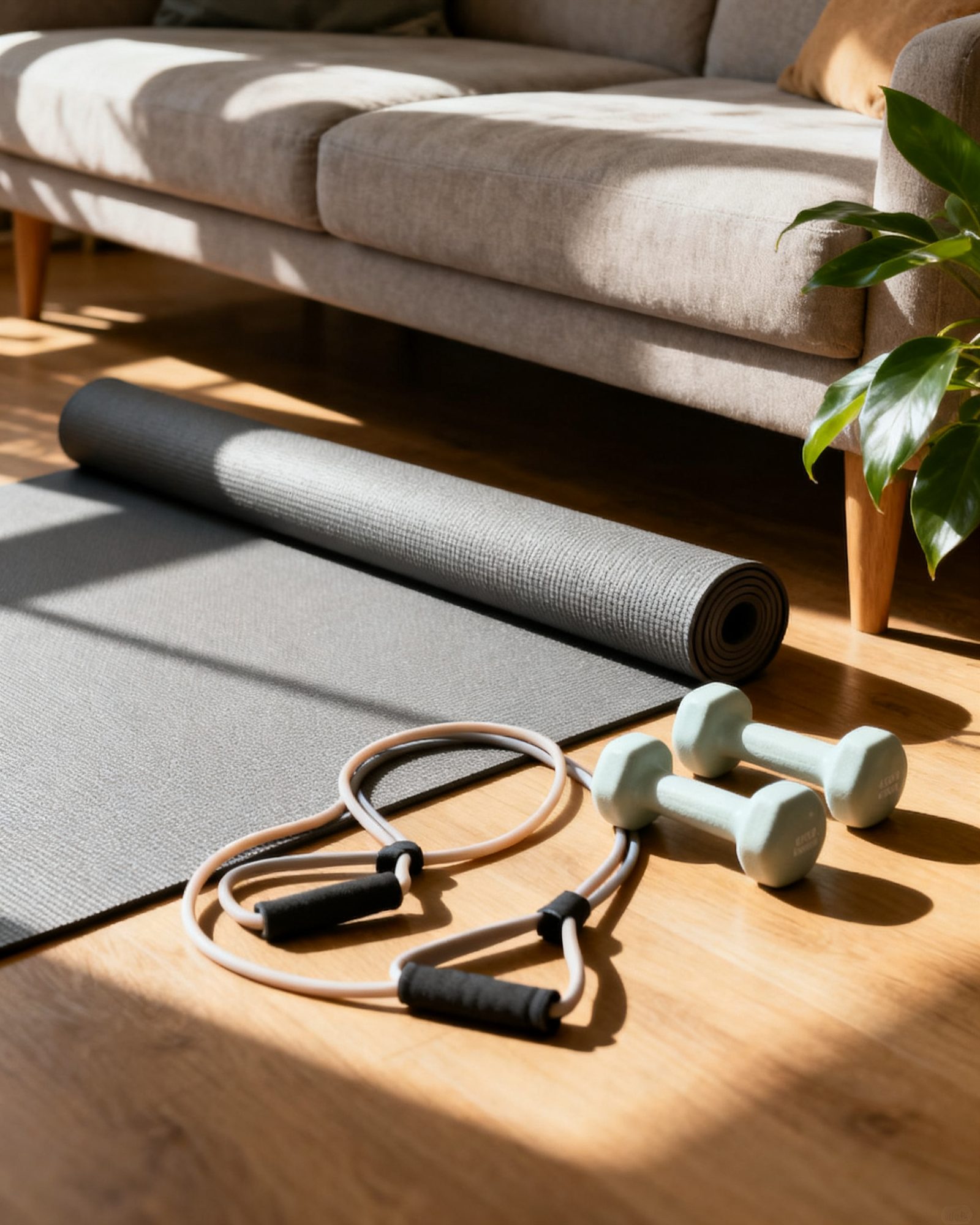
Stretching is a simple way to keep your muscles and joints moving comfortably, and it fits easily into a home routine. For beginners, the key is to stretch gently, never into pain, and to know which kind of stretch belongs before a workout and which belongs after. This guide explains static and dynamic stretching, how long to hold each stretch, a basic routine you can do at home, and the mistakes that lead to trouble.
Static vs dynamic stretching: what’s the difference?
Static stretching means holding a position still, letting the muscle lengthen. You move into the stretch and stay there. Dynamic stretching means moving a joint through its range of motion, often with gentle controlled swings or steps, without holding at the end. Both have a place, but at different times.
| Type | What it looks like | Best time to use it | Example |
|---|---|---|---|
| Dynamic | Controlled movement through range | Before exercise, as part of the warm-up | Leg swings, arm circles, walking lunges |
| Static | Holding a still position | After exercise, when muscles are warm | Standing calf stretch, seated hamstring stretch |
A warm-up should include dynamic movement to prepare your body for activity. Static stretching is most effective when the muscles are warm, so save the longer holds for after your workout or for a separate session. For a full warm-up and cool-down routine, see how to warm up and cool down before and after exercise.
How long should you hold a stretch?
The guidelines from the American College of Sports Medicine (ACSM) give clear numbers for static stretching. Hold each stretch for 10 to 30 seconds to the point of mild tightness or slight discomfort, never pain. Older adults may benefit from holding for 30 to 60 seconds. Repeat each stretch 2 to 4 times, aiming for about 60 seconds in total per stretch. Do flexibility exercises on at least 2 to 3 days a week.
| Guideline | Recommendation |
|---|---|
| Hold time (most adults) | 10 to 30 seconds |
| Hold time (older adults) | 30 to 60 seconds |
| Repetitions per stretch | 2 to 4 |
| Total time per stretch | About 60 seconds |
| Frequency | At least 2 to 3 days a week |
| Sensation | Mild tightness or slight discomfort, never pain |
These numbers are a guide, not a test. If you are new to stretching, start with the shorter holds and fewer repetitions, and build up gradually.
A simple stretching routine for home
You do not need equipment or a lot of space. A mat or a carpeted floor is enough. Move into each stretch slowly, breathe normally, and stop if you feel sharp pain. The stretches below cover the main areas beginners often feel tight.
Calves
Stand facing a wall and place both hands on it. Step one foot back, keeping that leg straight and the heel on the floor. Bend the front knee and lean gently forward until you feel a stretch in the back calf. Hold, then switch sides.
Hamstrings
Sit on the floor with one leg straight and the other bent. Keeping your back straight, hinge forward from the hips until you feel a stretch behind the straight leg. Do not round your back or push into pain. Hold, then switch.
Hip flexors
Kneel on one knee with the other foot in front, forming a low lunge. Tuck your pelvis slightly and shift your weight forward until you feel a stretch at the front of the hip of the kneeling leg. Keep your torso upright. Hold, then switch.
Quadriceps
Stand near a wall for balance. Bend one knee and bring your heel toward your buttock, holding your ankle with your hand. Keep your knees close together and a slight, soft bend in the standing knee rather than locking it. Hold, then switch.
Chest
Stand in a doorway and place your forearms on the frame, elbows at about shoulder height. Step one foot forward gently until you feel a stretch across your chest. Keep your shoulders down. Hold.
Shoulders
Bring one arm across your chest and use the other hand to gently pull it closer. Keep your shoulder relaxed and avoid shrugging. Hold, then switch.
Upper back
Sit or stand tall, clasp your hands in front of you, and round your upper back gently as you reach your hands forward. You should feel a stretch between your shoulder blades. Hold.
Dynamic mobility exercises for the warm-up
Before a workout, use gentle movement to warm the muscles and prepare the joints. These are not held stretches; you move in and out of the position.
- Arm circles: stand tall and make slow circles with your arms, forward and backward.
- Leg swings: hold a wall for balance and swing one leg forward and back, then side to side, keeping the movement controlled.
- Walking lunges: step forward into a lunge, then bring the back leg through to the next step.
- Torso twists: stand with feet hip-width apart and turn your upper body gently side to side.
Dynamic mobility is especially useful before activities that use a lot of movement, such as a dance class or a brisk walk. For more structured movement, yoga combines postures, breathing and balance; see yoga for beginners: styles, a first class and what to bring for an introduction.
Balance and coordination
ACSM recommends neuromotor exercise (balance, agility and coordination) on 2 to 3 days a week for 20 to 30 minutes, especially for older adults. It can be as simple as standing on one leg while holding a counter, or practicing tai chi or yoga. Start near a wall or sturdy chair so you have support if needed.
What goes wrong: common mistakes and warning signs
Stretching is gentle, but doing too much too soon or pushing into pain can cause problems. Watch for these common mistakes.
- Bouncing while stretching. Bouncing jerks the muscle past a comfortable range and can make it tighten rather than relax. Hold still instead.
- Stretching cold muscles intensely. Save longer static holds for after activity, when muscles are warm.
- Pushing into pain. A stretch should feel like mild tightness, not sharp pain. If it hurts, ease off.
- Holding your breath. Breathe slowly and steadily; do not strain.
- Skipping the warm-up. Dynamic movement first helps prepare the body.
- Stretching an injured area. If you have an injury or joint problem, talk to your doctor or physiotherapist before stretching that area.
Sharp or sudden pain, pain in a joint, swelling, or pain that does not ease is not normal soreness. Stop and talk to a doctor or physiotherapist. If you have a health condition, are pregnant, or are unsure whether stretching is right for you, ask your doctor before starting.
Fitting stretching into your week
Stretching does not need to be a separate event. You can add a few static stretches after a walk or home workout, or do a short routine while watching television. The guidelines suggest flexibility work on at least 2 to 3 days a week, but gentle movement on other days is fine too. Consistency matters more than duration.
Rest and recovery are part of the picture. Muscles adapt between sessions, and sleep is part of recovery. Adults aged 18 to 60 need 7 or more hours of sleep a night, according to the CDC. For more on soreness, sleep and listening to your body, see rest days and recovery: soreness, sleep and listening to your body.
When to ask your doctor
Talk to your doctor before starting a stretching routine if you are pregnant, have an injury, have a heart or other health condition, or have pain that worries you. This guide is general information, not medical advice, and gives no programme for those situations. If you feel chest pain, dizziness, or unusual breathlessness, stop and seek medical help.
Common questions
How long should I hold a stretch as a beginner?
Hold each static stretch for 10 to 30 seconds to mild tightness, never pain. Repeat 2 to 4 times, aiming for about 60 seconds total per stretch. Older adults may hold for 30 to 60 seconds.
Should I stretch before or after a workout?
Use dynamic movement, like leg swings and arm circles, before a workout to warm up. Save static holds for after exercise, when muscles are warm and more receptive to stretching.
How often should I stretch?
Aim for flexibility exercises on at least 2 to 3 days a week. Gentle movement on other days is fine. Consistency matters more than long sessions.
Can stretching help with sore muscles?
Gentle movement can help with delayed onset muscle soreness, which usually begins 12 to 24 hours after exercise and eases within a few days. Sharp pain, joint pain or swelling is not normal soreness; stop and talk to a doctor.
Is it safe to stretch during pregnancy?
Talk to your doctor or midwife about what activity is right for you during pregnancy. This guide gives no pregnancy programme; your doctor or midwife can tell you which stretches suit you.
Read next
Home Workouts for Beginners: No Gym Needed
Start home workouts for beginners with no equipment. Learn bodyweight moves, a sample session, safety tips, and how to progress at your own pace.
Home Workout Equipment: What's Worth Having
A plain guide to home workout equipment for beginners: which mat, bands, dumbbells and step are worth having, what each adds, and what to skip.
Rest Days and Recovery: Soreness, Sleep and Listening to Your Body
How many rest days you need, what muscle soreness after a workout means, how DOMS works, and how sleep and active recovery help you train at home.