Yoga for Beginners: Styles, First Class and What to Bring
New to yoga? Compare hatha, vinyasa, yin, restorative and hot yoga, learn what happens in a first class, what to bring and how to make poses easier.
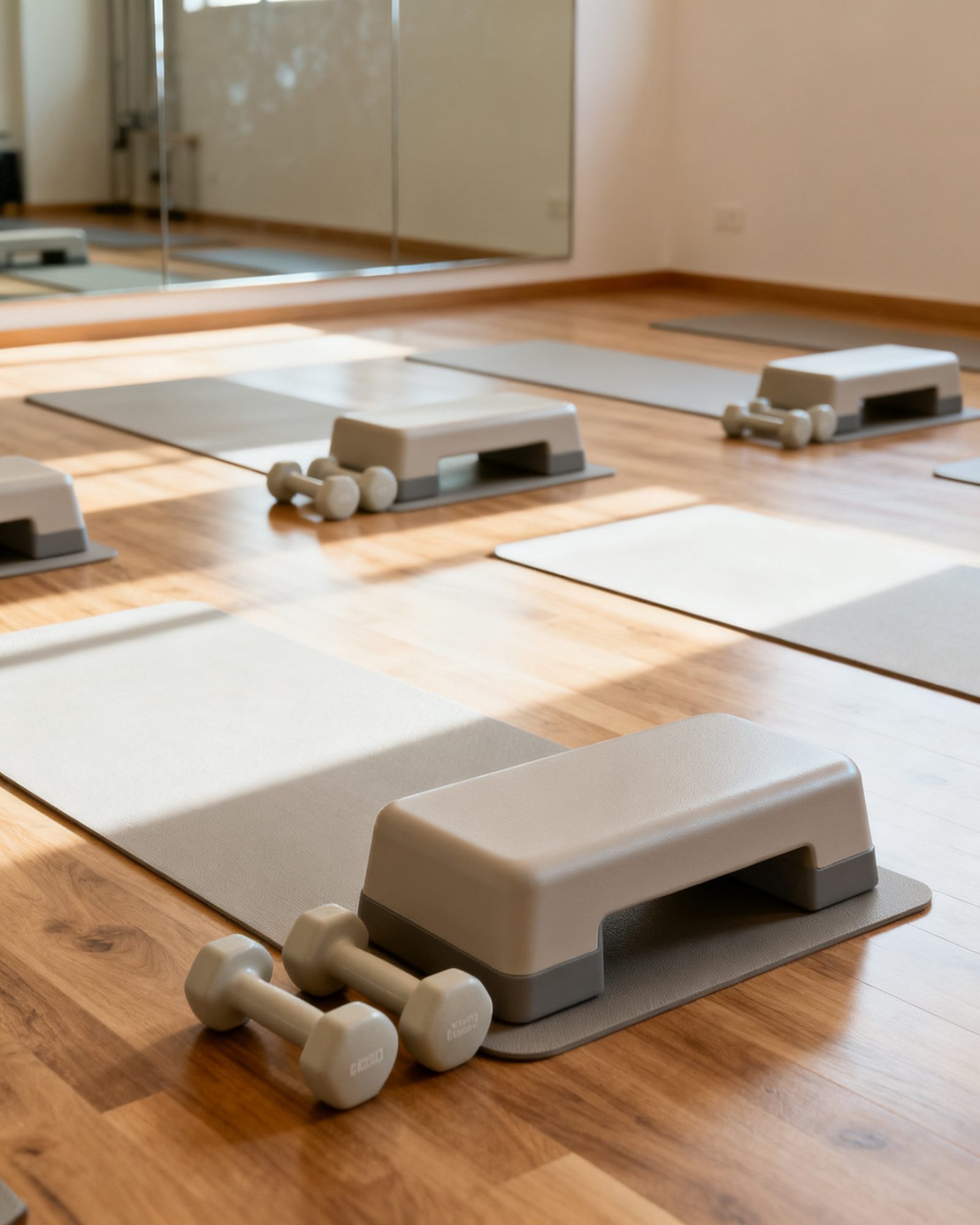
Yoga is a practice of postures, breathing and relaxation that originated in ancient India. For a beginner, the simplest way in is a class labeled beginner, gentle or hatha, where the teacher explains each shape and moves slowly. You do not need to be flexible, own special clothes or know the pose names. You need comfortable clothing, water and a willingness to skip what does not feel right. This guide explains the main styles, what happens in a first class, what to bring and how to look after yourself.
The main styles of yoga, compared
Most studios and community centers offer several styles. The table below compares the ones a beginner is most likely to meet. Class lengths vary, so ask the studio rather than assuming.
| Style | What it is like | Pace | Good first choice for |
|---|---|---|---|
| Hatha | Postures held for a few breaths, with time to learn alignment and breathing | Slower | Almost every beginner; often labeled beginner or gentle |
| Vinyasa or flow | Postures linked to the breath in a continuous sequence | Faster, more continuous | Beginners with some fitness who want movement; look for a slow-flow class |
| Yin | Long, passive holds, often seated or lying down, with props for support | Very slow | People who want a quiet, still practice; good after a busy day |
| Restorative | Fully supported poses with bolsters and blankets, held for comfort | Very slow | Anyone who wants deep rest; useful when tired or stressed |
| Hot yoga | The same postures in a heated room | Varies | Experienced practitioners; see the caution below before trying it as a beginner |
Hatha and vinyasa are the two names beginners hear most. Hatha is the broader, slower approach; vinyasa links movement to breath and tends to keep you moving. If you are choosing between hatha vs vinyasa for a first class, hatha is usually the gentler introduction. A studio that labels a vinyasa class “slow flow” or “beginners welcome” is also a reasonable start.
Yin and restorative are quiet styles. They are not a workout in the usual sense; they ask you to settle into a shape and stay. They can be a good way to learn to relax and to notice what your body feels like. Hot yoga is different: the room is heated, which raises your body temperature and makes the effort feel harder. It is not the place to begin. If you have a heart condition, are pregnant or feel unwell, talk to your doctor before any heated class.
What happens in a beginner yoga class
A typical class follows a simple arc. The teacher welcomes everyone, asks about injuries or first-timers, and explains where the props are. Then comes a warm-up: gentle movement of the spine, shoulders and hips, often on hands and knees or seated. The main part of the class introduces standing poses, balances and seated or lying shapes, with options for each. The class ends with a cool-down and a short rest, often lying on your back with eyes closed.
You are not expected to know the Sanskrit names. Teachers usually demonstrate and describe the shape in plain words. If you cannot see or follow, look around; everyone else is learning too. You can copy a neighbor, or ask the teacher to repeat a cue after class.
A first class is also a chance to learn the etiquette. Arrive a few minutes early, take off your shoes at the door if that is the custom, and put your mat where you can see the teacher. Tell the teacher it is your first class and mention anything that might matter, such as a recent injury or pregnancy. Stay for the whole class if you can; leaving early is fine if you need to, but tell the teacher quietly first.
What to bring and how to set up your space
You need very little. A mat is the main item; studios usually lend or hire them, and a towel over a borrowed mat works too. Wear clothing you can move and breathe in, and bring water. Props such as blocks, straps and bolsters are there to help, not to mark you out as a beginner. A block brings the floor closer when you cannot reach it; a strap extends your reach; a bolster supports you in restorative poses. Using them is normal at every level.
At home, a clear space on a non-slip floor is enough. A mat helps, but a carpet or a folded blanket can work. Keep water nearby and put your phone away. If you follow a video, watch it once first so you know what is coming.
Making poses easier or harder
Every pose has a version for today. The teacher should offer options; if not, ask. The general rule is to move toward mild stretch or effort, never sharp pain.
- Easier: bend your knees in forward folds, put your hands on blocks, lower your back knee to the mat in lunges, stand near a wall for balance poses, or rest in a seated or lying position whenever you need.
- Harder: hold a pose for a few more breaths, extend the reach of your arms, or try a balance away from the wall once you feel steady. Harder is not better; it is just different.
Many people try yoga for flexibility, but flexibility builds gradually. Pushing for a deeper stretch today can leave you sore tomorrow. Yoga styles hold poses for different lengths of time, and the teacher sets the pace; the general ACSM stretching guidance is to hold a static stretch for 10 to 30 seconds to the point of mild tightness, never pain, and repeat each stretch 2 to 4 times. Stretching is most effective when the muscles are warm, which is why a class warms up first.
Listening to your body and skipping poses
Skipping a pose is a skill, not a failure. If a shape does not feel right, come out of it and rest. Common reasons to skip or modify: a wrist that aches in hands-and-knees poses, a knee that complains in kneeling shapes, dizziness in a forward fold, or simply being tired. Sit or lie down and rejoin when you are ready. The teacher would rather you rest than push through.
Sharp or sudden pain, pain in a joint, swelling, or pain that does not ease is not normal soreness. Stop and talk to a doctor or physiotherapist. If you feel chest pain, faint or unusually breathless, stop and seek medical help. Soreness after class is common, especially after unfamiliar movement; it usually begins 12 to 24 hours later and eases within a few days. Gentle movement and rest help. For more on this, see rest days and recovery.
If you are pregnant, postpartum, injured or living with a health condition, ask your doctor before starting or changing exercise, and follow their advice on what is right for you. This page gives no programme for those situations.
What goes wrong, and how to avoid it
Most beginner problems are small and fixable.
- Comparing yourself to the room. Others may have practiced for years. Their range is not your target. Keep your attention on your own breath and effort.
- Holding your breath. Breathing is part of the practice. If you notice you are holding your breath, slow down or come out of the pose.
- Pushing into pain to look flexible. Mild tightness is fine; sharp pain is not. Bend your knees, use a block, or skip.
- Skipping the warm-up or the rest at the end. Both are part of the class. Arrive on time and stay for the cool-down if you can.
- Trying hot yoga first. Heat makes everything harder and raises the risk of feeling faint. Build a base in a normal-temperature class first, and talk to your doctor if you have any health condition.
- Expecting a workout high. Some classes are gentle and quiet. That is the point. If you want more movement, try a flow class or add a separate strength session.
- Ignoring a health condition. If you have a known heart, metabolic or kidney condition, symptoms such as chest pain or dizziness, or you are pregnant, talk to a doctor before starting.
Yoga is one option among many. If you are still deciding which class type suits you, the guide to group fitness classes explained compares yoga with Pilates, dance fitness and more. Pilates is a different method with a similar calm feel; see Pilates for beginners if you are choosing between the two. And if you want to build a gentle home routine between classes, stretching and mobility covers the basics safely.
A simple first-class checklist
- Tell the teacher it is your first class and mention any injury or pregnancy.
- Borrow or bring a mat, and take a water bottle.
- Wear comfortable clothing you can move in.
- Take the easier option whenever you are unsure.
- Rest whenever you need; skipping a pose is allowed.
- Stay for the cool-down and rest at the end.
- Expect to feel a little uncoordinated; that is normal.
- Ask the teacher one question after class; it builds confidence for next time.
Common questions
What is the easiest type of yoga for beginners?
Hatha, gentle and beginner-labeled classes are usually the easiest entry point. They move slowly, explain the shapes and offer props. Yin and restorative are also gentle but very still; vinyasa is faster. Look for a class described as beginner or slow flow.
Do I need to be flexible to start yoga?
No. Flexibility builds with practice, and every pose has an easier version using bent knees, blocks or a strap. Pushing for a deeper stretch can cause soreness. Move to mild tightness, never pain, and let the range come over time.
What should I bring to my first yoga class?
Bring water and wear comfortable clothing you can move in. Most studios lend or hire mats, and props such as blocks, straps and bolsters are provided. A small towel is useful if you borrow a mat. Arrive a few minutes early and tell the teacher it is your first class.
Is hot yoga safe for beginners?
It is better to build some experience in a normal-temperature class first. Heat makes effort feel harder and raises the chance of feeling faint. If you have a heart condition, are pregnant or feel unwell, talk to your doctor before any heated class.
Can I do yoga if I am pregnant or have an injury?
Ask your doctor before starting or changing exercise, and follow their advice on what is right for you. This page gives no programme for pregnancy, postpartum, injury or health conditions. In class, tell the teacher and skip or modify anything that does not feel right.
Read next
Barre Class for Beginners: What to Expect
What a barre class is really like, from warm-up to mat work and the shake. Learn how barre compares to Pilates and yoga, and how to prepare for your first class.
Types of Group Fitness Classes: Which One Suits You?
Compare spin, HIIT, Pilates, yoga, Zumba, barre, aqua aerobics and circuit classes: what each involves, effort, joint impact and how to pick a first class.
HIIT for Beginners: What a High-Intensity Class Involves
What HIIT is, what happens in a beginner class, how hard to push, how to make moves low impact, and how to fit HIIT into a safe week.