How to Stay Motivated to Exercise When Motivation Fades
Motivation fades, but habits last. Learn how to stay motivated to exercise with small starts, tracking what you do, and planning for bad weeks.
Motivation is a feeling, and feelings change. People who keep exercising are often not more motivated than anyone else; they have built habits that carry them when motivation dips. You can do the same. Start with a plan that fits your real life, make the first step small, and expect some weeks to go better than others. This guide shows how to stay motivated to exercise by focusing on what you do, not on how you feel on any given day.
Start smaller than you think
A common mistake is to begin with an ambitious routine that leaves you tired and sore. That makes it easy to skip the next session. Instead, start below your limit and increase gradually. The US Physical Activity Guidelines say that some physical activity is better than none, and that inactive people should begin with lighter activity and build up over weeks and months.
For a home workout, that might mean a short session of bodyweight exercises, a walk, or a few stretches. The guidelines dropped the old rule that activity had to come in bouts of at least 10 minutes; activity of any length counts toward the weekly total. So a few minutes here and there still adds up.
Make a plan you can keep
A workout routine works best when it is scheduled. Put sessions in your calendar like appointments. Choose days and times that fit your week, and keep the first sessions short. The NHS suggests spreading exercise evenly over 4 to 5 days a week or every day. That does not mean every session must be hard; it means moving regularly.
One way to reach the adult guideline of 150 minutes a week is 30 minutes a day, 5 days a week. But you can also break it up. A 10-minute walk, a short strength session, and a stretch before bed all count. For a full picture of how much activity adults need, see how much exercise do you need?.
Choose activities you enjoy
You are more likely to repeat something you like. That could be a dance fitness class, a home workout video, or a walk with a friend. If you are curious about dance fitness, Zumba and dance fitness classes for beginners explains what to expect. For home options, home workouts for beginners: no gym, no problem has ideas that need little or no equipment.
Track what you do, not your body
Tracking your workouts can help you see progress and stay consistent. But be careful what you measure. Instead of tracking weight or body shape, track actions: how many sessions you completed, how many minutes you moved, or how many days you did your strength routine. You can use a simple calendar, a notebook, or a phone note. Put a mark for every session, even a short one.
Goals based on strength, skills, and how you feel are more useful. For example: “I want to do one more push-up this month,” “I want to finish a class without stopping,” or “I want to feel less stiff in the morning.” These goals are within your control and do not depend on the scale.
Plan for bad weeks
Every routine hits bumps. A bad week is not a failure; it is information. Maybe you were sick, busy, or simply not in the mood. The key is to have a plan for getting back on track without guilt. One approach is to decide on a minimum version of your workout: a short walk, a few stretches, or one set of an exercise. Doing something small keeps the habit alive.
Restart without guilt
If you miss several sessions, just start again. Do not try to make up for lost time by doubling up. Begin with a lighter session and build back gradually. Soreness is normal when you return after a break, but sharp pain is not. Learn more about rest days and recovery: soreness, sleep and listening to your body.
Use a buddy or a class
Having someone to exercise with can help you show up. A workout buddy can be a friend, a family member, or an online group. You can also join a class, either in person or online. A class gives you a set time and an instructor to follow. If you are new to exercise, a beginner-friendly class is a good choice.
Common obstacles and fixes
| Obstacle | What to try |
|---|---|
| “I don’t have time.” | Schedule short sessions. Activity of any length counts. Try a 10-minute walk or a few bodyweight exercises. |
| “I’m too tired.” | Do a gentle session: stretching, a short walk, or easy yoga. Sometimes movement gives you energy. |
| “I’m bored.” | Try a new activity or a different class. Rotate between walking, strength, and dance. |
| “I missed a week.” | Start again with a lighter session. Do not wait for the perfect moment. |
| “I don’t know what to do.” | Follow a beginner plan or a class. Start with bodyweight exercises like squats, lunges, and push-ups (on the knees or against a wall). |
| “I’m not seeing results.” | Track actions, not appearance. Notice how you feel, sleep, and strength. |
What goes wrong
Waiting for motivation
Motivation often comes after you start, not before. Waiting to feel motivated can keep you stuck. Instead, set a small action and do it, even if you do not feel like it. The feeling often follows.
Doing too much too soon
Beginners often start with an intense routine that leaves them exhausted and sore. That can lead to skipping sessions or giving up. Start with lighter activity and increase gradually. For strength training, learn the movement with a light load before adding weight. Correct form comes first.
All-or-nothing thinking
Missing one session does not ruin your routine. The goal is consistency over time, not perfection. If you miss a day, just continue with the next scheduled session. Do not write off the whole week.
Ignoring rest and sleep
Rest is part of the routine. Adults aged 18 to 60 need 7 or more hours of sleep a night. Sleep helps you recover and feel ready to exercise. If you are constantly tired, check your sleep and consider a rest day; if the tiredness does not lift, talk to your doctor.
Warning signs
Stop exercising and seek medical help for chest pain or pressure, fainting, severe breathlessness, or dizziness. Sharp or sudden pain, pain in a joint, swelling, or pain that does not ease is not normal soreness: stop and talk to a doctor or physiotherapist. If you have a known heart, metabolic, or kidney condition, or you are pregnant, injured, or unsure, talk to a doctor before starting a new exercise programme.
Build habits that last
Consistency in fitness comes from small, repeatable actions. Here are some habit-building ideas:
- Set a regular time. Exercise at the same time each day or week so it becomes automatic.
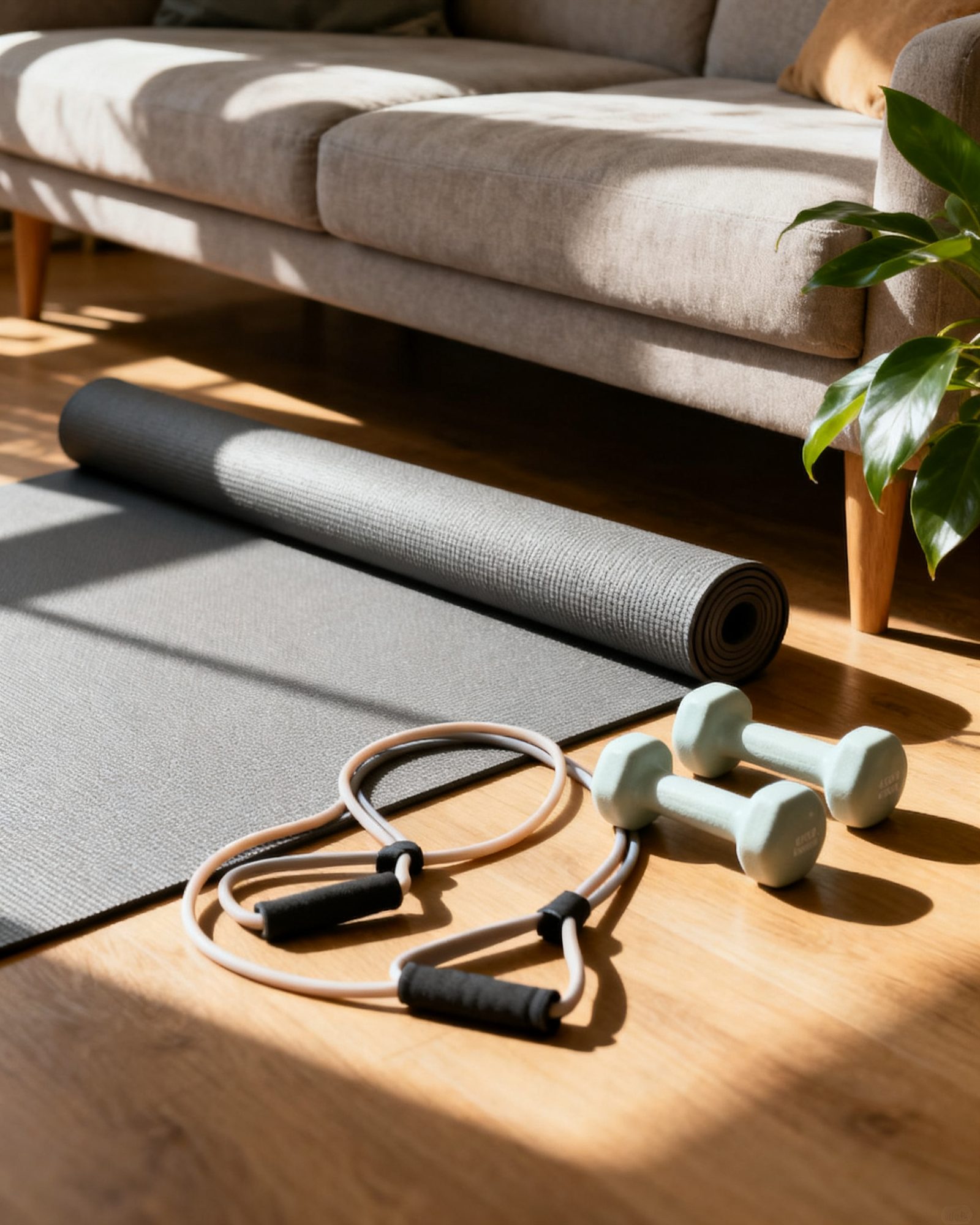
- Prepare your space. Keep your workout clothes and equipment where you can see them.
- Start with a warm-up. Warm up for at least 5 to 10 minutes at light to moderate intensity before a session, and cool down for at least 5 to 10 minutes afterwards.
- Use the talk test. Moderate intensity means you can talk but not sing. Vigorous intensity means you cannot say more than a few words without pausing for a breath.
- Celebrate small wins. Note when you complete a session or try something new.
- Be kind to yourself. If you have a bad week, treat it as a learning experience and move on.
Make it social
Exercising with others can boost enjoyment and accountability. Join a class, find a workout buddy, or follow an online video with a friend. If you prefer solo exercise, you can still connect with others through online communities or by sharing your progress with a friend.
Keep the long view
Regular physical activity is one of the most important things you can do for your health. In the short term, it can help you feel better, sleep better, and reduce feelings of anxiety. Over time, it improves physical function and fitness. Those are the reasons to keep going, not what the scale says.
When motivation fades, rely on your habits. Show up for a short session, track your actions, and plan for the inevitable bad weeks. That is how consistency is built.
Common questions
How do I stay motivated to exercise when I don't feel like it?
Start with a very small action, like a short walk or a few stretches. Motivation often follows action. Set a regular time and prepare your space so it is easier to begin.
How long does it take to make exercise a habit?
There is no fixed time; it varies. Focus on repeating small actions consistently. The US Physical Activity Guidelines say some activity is better than none, and any length counts toward your weekly total.
What should I do if I miss a week of workouts?
Just start again with a lighter session. Do not try to make up for lost time. Begin gradually and build back up. Soreness is normal, but sharp pain is not.
How do I stay consistent with exercise when I have a busy schedule?
Schedule short sessions and treat them like appointments. Break activity into smaller chunks; activity of any length counts. The NHS suggests spreading exercise over 4 to 5 days a week or every day.
Is it better to exercise with a friend or alone?
Both can work. A friend or class can provide accountability and enjoyment. Choose what fits your personality and schedule. The best routine is one you will repeat.
Read next
Home Workouts for Beginners: No Gym Needed
Start home workouts for beginners with no equipment. Learn bodyweight moves, a sample session, safety tips, and how to progress at your own pace.
Home Workout Equipment: What's Worth Having
A plain guide to home workout equipment for beginners: which mat, bands, dumbbells and step are worth having, what each adds, and what to skip.
Rest Days and Recovery: Soreness, Sleep and Listening to Your Body
How many rest days you need, what muscle soreness after a workout means, how DOMS works, and how sleep and active recovery help you train at home.