Weight Training for Women: Myths and a Sensible Start
Weight training for women: what the guidelines say, how to start with free weights or machines, and the myths that put beginners off.
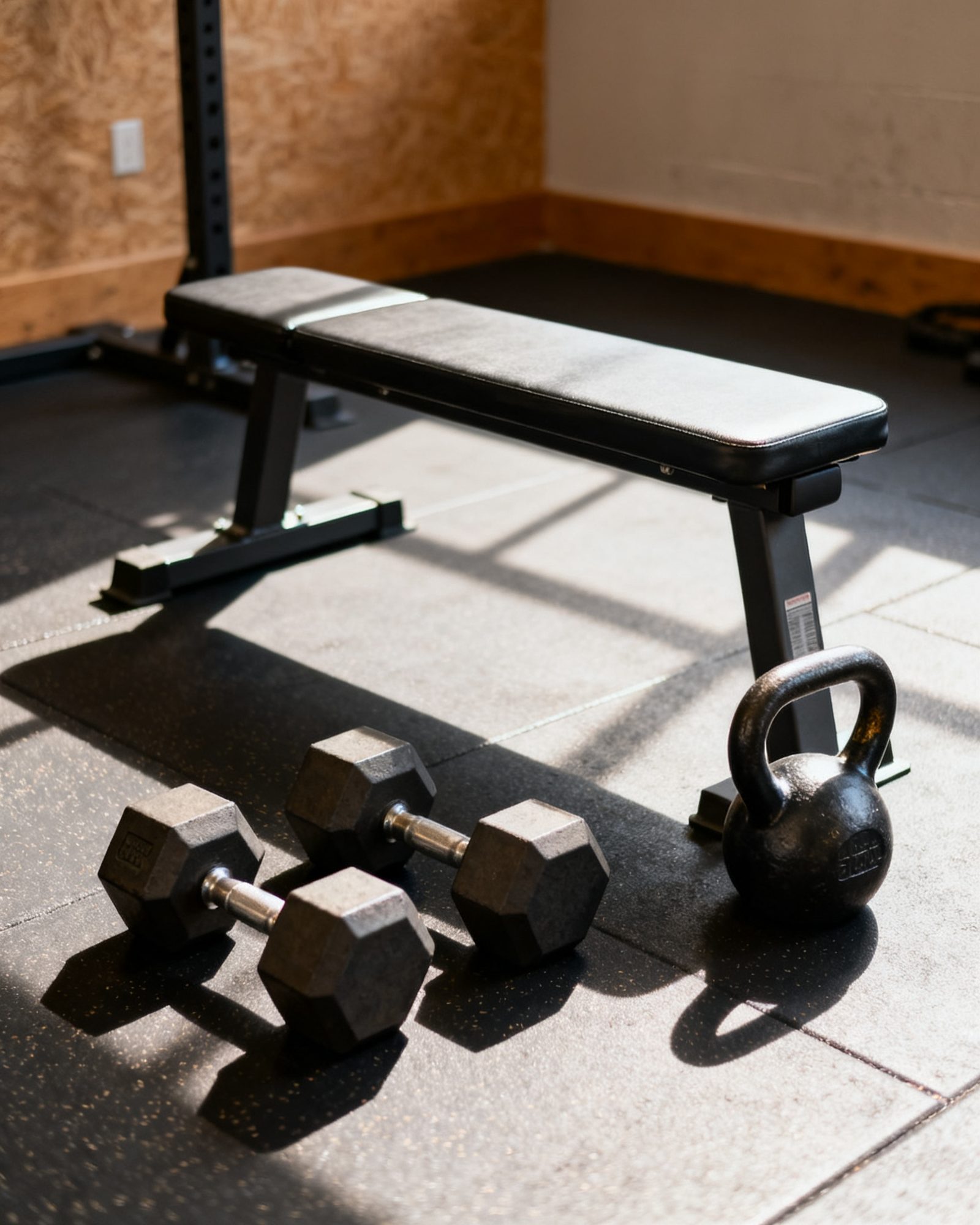
Weight training for women works the same way it does for anyone: you train each major muscle group on 2 or more days a week, learn the movements with a light load, and add weight gradually. The guidelines do not change by sex. What changes is the noise around it - myths about getting bulky, needing different exercises, or having to stick to tiny weights. None of that holds up.
The myths, answered plainly
“Lifting will make me bulky”
Building large amounts of muscle is a slow, deliberate process that a beginner programme is not designed for. A beginner doing 2 to 3 sessions a week with sensible progression builds strength, better movement and confidence. The US Physical Activity Guidelines describe muscle-strengthening activity on 2 or more days a week as part of the basic weekly routine for all adults.
“Women need different exercises from men”
No. The major muscle groups are the legs, hips, back, abdomen, chest, shoulders and arms, and the guidelines say to work all of them on 2 or more days a week. The same squats, presses, rows and hinges serve everyone. What differs is your starting point, your experience and what you enjoy - not your sex.
“Do cardio first and lift later”
Both count, and neither has to wait. The guidelines ask for aerobic activity and muscle-strengthening activity in the same week. If lifting is new, it is fine to start with 2 days a week of strength work and build your aerobic activity alongside it. A hard cardio session right before lifting can leave you tired while you are still learning form, so if you combine them in one session, many beginners find it easier to lift first or leave a gap.
“Women should only use light dumbbells”
The weight you use should match the exercise and your current strength, not your gender. A light load is the right place to learn a movement. Once you can do your target repetitions with good form, the ACSM progression guidance suggests raising the load by about 2 to 10 percent. That applies to everyone.
What the guidelines say for everyone
The US Physical Activity Guidelines (2nd edition, 2018), the CDC and the NHS agree on the basics:
| Guideline | What it means in practice |
|---|---|
| Muscle-strengthening activity on 2 or more days a week | Two full-body sessions a week is a complete starting point |
| Work all major muscle groups | Legs, hips, back, abdomen, chest, shoulders and arms |
| At least 150 to 300 minutes a week of moderate aerobic activity | Separate from lifting; walking, swimming, cycling and classes all count |
| Move more and sit less | Some activity is better than none, and any length counts |
ACSM adds the detail that makes a session work:
- Train each major muscle group on 2 to 3 days a week, with at least 48 hours between sessions for the same muscle group.
- For most adults, 2 to 4 sets of each exercise improve strength. A single set can be effective, especially for beginners and older adults.
- 8 to 12 repetitions per set improve strength in most adults. 10 to 15 repetitions at a lighter effort suit older or previously inactive people who are starting out.
- Rest about 2 to 3 minutes between sets.
- Use a mix of multi-joint exercises (squats, presses, rows) and single-joint exercises.
- Learn the movement with a light load before adding weight. Correct form and a full, controlled range of motion come first.
- Breathe out during the effort and in during the return; do not hold your breath.
If you are completely new, the step-by-step walkthrough in strength training for beginners: where to start covers choosing exercises and your first session. For weekly layouts, see a beginner strength workout plan: sample weekly schedules.
Starting in the free-weight area with confidence
The weights room is often the part of a gym that feels most closed off. It is not. A few practical steps make the first visit ordinary:
- Go at a quiet time if you can. Ask staff when the free-weight area is least busy.
- Know your first three exercises before you walk in. A squat, a press and a row cover a lot of ground. Write them down.
- Start with dumbbells or machines, not the barbell. Both are legitimate strength tools. Machines guide the path of the movement; free weights ask more of your balance and coordination.
- Set up your space. Take the weights you need to a clear spot, and put them back when you finish.
- Use the mirror to check position, not to judge yourself. Look at whether your knees track over your toes and your back stays long.
If nerves are the main barrier, gym anxiety: how to feel at ease as a beginner has practical scripts and a first-visit plan.
Free weights or machines?
| Free weights | Machines | |
|---|---|---|
| What they ask of you | Balance, coordination and control as well as strength | Mostly strength; the machine sets the path |
| Learning curve | Steeper at first | Gentler for a first session |
| Good for | Squats, lunges, presses, rows, hinges | Learning a movement pattern and training a muscle group directly |
| Watch out for | Losing form as you get tired | Setting the seat and pads to fit your body |
Many beginners use machines to learn the movement and free weights to build control. Neither is a lesser choice.
Sets, reps and how to add weight
A simple beginner template for each exercise:
- Repetitions: 8 to 12 per set for most adults; 10 to 15 at a lighter effort if you are older or have been inactive.
- Sets: 2 to 4 per exercise. A single set can be effective when you are starting out.
- Rest: about 2 to 3 minutes between sets.
- Load: light enough to complete every repetition with controlled form, heavy enough that the last two feel like work.
- Progression: when you can lift the current load for one or two repetitions more than your target on consecutive sessions, raise it by about 2 to 10 percent.
That last point is the whole game. Strength comes from gradually asking more of the muscles, not from a perfect first session.
Training around your menstrual cycle
Energy, comfort and motivation can shift across the month, and it is normal for some sessions to feel harder than others. General approaches that help:
- Keep the same weekly structure but adjust the load or the number of sets on days when you feel low on energy.
- Choose the exercises you find most comfortable on those days; some people prefer machines or bodyweight work when they feel tired.
- Warm up for at least 5 to 10 minutes at light to moderate intensity before a session, and cool down for at least 5 to 10 minutes afterwards.
- If bleeding is very heavy, painful or unusual for you, talk to your doctor rather than training through it.
Older women, balance and everyday strength
The guidelines describe regular physical activity as one of the most important things people can do for their health, and that includes strength work at any age. Adults 65 and older should also do multicomponent activity that includes balance training, alongside aerobic and muscle-strengthening work. ACSM recommends neuromotor exercise such as tai chi and yoga on 2 to 3 days a week for 20 to 30 minutes, especially for older adults.
Practical adjustments:
- Use the 10 to 15 repetition range at a lighter effort when starting out.
- Older adults may benefit from holding stretches for 30 to 60 seconds; 10 to 30 seconds is the general range.
- Include balance work such as standing on one foot near a wall or chair.
- If you cannot meet the full guideline because of a chronic condition, be as active as your abilities and condition allow.
Pregnancy and postpartum
Healthy women who are pregnant or postpartum should aim for at least 150 minutes of moderate-intensity aerobic activity a week, spread throughout the week, if their health care provider agrees. Women who regularly did vigorous activity before pregnancy can generally continue, after talking with their provider about whether and how to adjust it. This page gives no pregnancy or postpartum programme: ask your doctor or midwife about how much and what kind of activity is right for you.
What goes wrong, and how to avoid it
Adding weight too soon. Form first, load second. If your knees cave in, your back rounds or you cannot control the lowering phase, the weight is too heavy.
Skipping the warm-up. At least 5 to 10 minutes at light to moderate intensity before a session prepares your joints and muscles. It is not optional.
Training the same muscles on back-to-back days. Leave at least 48 hours between sessions for the same muscle group.
Holding your breath. Breathe out during the effort and in during the return.
Mistaking soreness for damage. Delayed onset muscle soreness usually begins 12 to 24 hours after exercise, is often worst 24 to 72 hours afterwards, then eases. Gentle movement can help. Sharp or sudden pain, pain in a joint, swelling, or pain that does not ease is not normal soreness: stop and talk to a doctor or physiotherapist.
Ignoring warning signs. Stop exercising and seek medical help for chest pain or pressure, fainting, severe breathlessness or dizziness.
Believing the myths. No exercise makes you bulky by accident, and no exercise is off-limits because of your sex. If you have a known heart, metabolic or kidney condition, symptoms such as chest pain or unusual breathlessness, or you are pregnant, injured or unsure, talk to your doctor before starting a new programme. Questionnaires such as the PAR-Q+ can help you decide.
Doing too much in week one. Start below your limit and build up over weeks and months. Soreness is normal at first and lessens as the body adapts.
A first month that works
- Two full-body sessions a week, each with a squat, a press, a row and one or two single-joint exercises.
- 2 to 4 sets of 8 to 12 repetitions, or 10 to 15 at a lighter effort.
- About 2 to 3 minutes between sets.
- A 5 to 10 minute warm-up and cool-down around each session.
- One small weight increase when the target repetitions feel controlled on consecutive sessions.
- Aerobic activity spread across the week to reach the weekly guideline.
That is a complete, sensible start, built on the guidelines - no special equipment required.
Common questions
Will lifting weights make me bulky?
No, not by accident. Building large amounts of muscle is a slow, deliberate process that a beginner programme is not designed for. A beginner doing 2 to 3 sessions a week builds strength, better movement and confidence. The guidelines recommend muscle-strengthening activity for all adults.
How many sets and reps should a woman do when starting strength training?
ACSM suggests 2 to 4 sets of 8 to 12 repetitions for most adults, or 10 to 15 repetitions at a lighter effort if you are older or have been inactive. A single set can be effective when you are starting out. Rest about 2 to 3 minutes between sets.
Do women need different exercises from men?
No. The major muscle groups are the legs, hips, back, abdomen, chest, shoulders and arms, and the guidelines say to work all of them on 2 or more days a week. The same squats, presses, rows and hinges serve everyone. Your starting point and experience matter, not your sex.
How do I feel less nervous in the weights room?
Go at a quiet time if you can, know your first three exercises before you walk in, and start with dumbbells or machines rather than a barbell. Write your plan down and use the mirror to check position. A first-visit plan helps; see the gym anxiety guide for practical scripts.
Can I lift weights while pregnant?
Healthy women who are pregnant or postpartum should aim for at least 150 minutes of moderate-intensity aerobic activity a week if their health care provider agrees. This page gives no pregnancy programme. Ask your doctor or midwife about how much and what kind of activity is right for you.
Read next
Beginner Weekly Workout Plan: 2-Day and 3-Day Strength Schedules
A sample beginner weekly workout plan with 2-day and 3-day full-body strength schedules, sets, reps, rest, warm-up and how to progress safely.
Free Weights vs Machines: Which Should a Beginner Use?
Free weights vs machines for beginners: compare learning curve, safety, stability and results. Learn how to combine both, use a spotter and avoid common mistakes.
Proper Lifting Form: Squat, Hinge, Push and Pull
Learn proper lifting form for squats, hip hinges, pushes and pulls. Plain cues, breathing, common faults and fixes, and when to lower the weight or ask a doctor.