Free Weights vs Machines: Which Should a Beginner Use?
Free weights vs machines for beginners: compare learning curve, safety, stability and results. Learn how to combine both, use a spotter and avoid common mistakes.
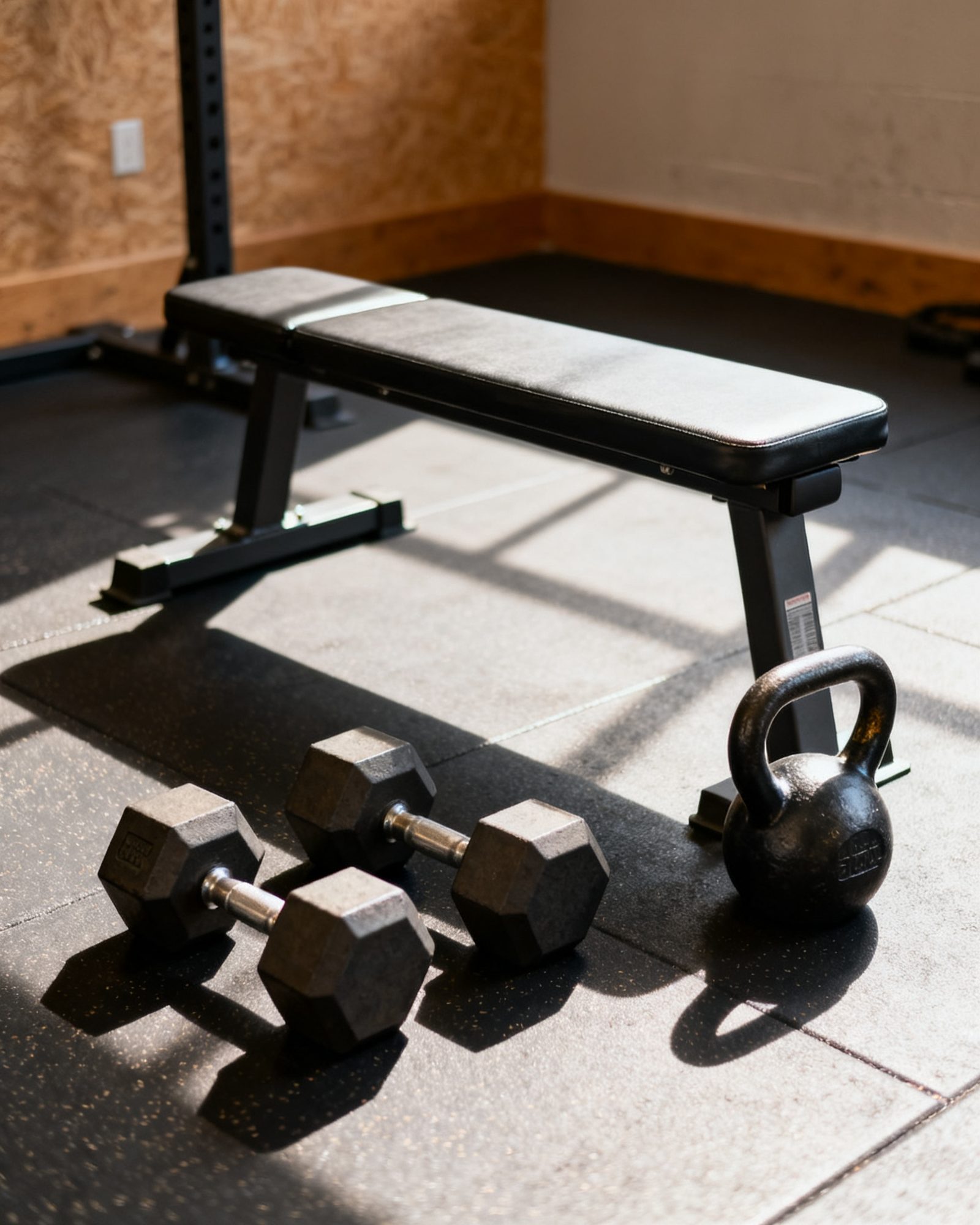
You can start with either free weights or machines. Machines are often easier to learn first because the path of the movement is fixed and you can focus on pushing or pulling. Free weights ask more of your balance and coordination, but they let you move in a way that suits your body and train the muscles that keep you stable. Most beginners do best with a mix: machines to learn the movements and build confidence, free weights to practise control and coordination. The US Physical Activity Guidelines say adults should do muscle-strengthening activities that work all the major muscle groups on 2 or more days a week, and both free weights and machines count.
What each option gives you
| Learning curve | Safety | Stability | Range of motion | Space | Good for | |
|---|---|---|---|---|---|---|
| Machines | Low: the machine guides the path | High: fixed path, pins and safety stops | Supported by the machine | Set by the machine’s path; many have a range adjustment | Takes up floor space in a gym | Learning a movement, training a muscle in isolation, training alone |
| Dumbbells | Moderate: you control the path | Moderate: you need control and space | You balance the weight | Free: follows your joints | Small: a rack or a corner | Beginners learning form, single-arm work, home use |
| Barbells | Higher: technique matters | Moderate to high: use a rack with safety bars | You balance a long bar | Free: follows your joints | Needs a rack and space | Building strength with multi-joint lifts |
| Kettlebells | Moderate: the offset weight takes getting used to | Moderate: swings and carries need control | You balance an offset load | Free: follows your joints | Small | Swings, carries, grip and coordination |
| Cables | Low to moderate: the pulley guides the path | High: smooth resistance, easy to control | Some support from the cable | Adjustable: the pulley sets the angle | Takes up wall space | Constant tension, rows, presses, rotations |
| Resistance bands | Low: light and forgiving | High: no falling weight | You control the band | Free: follows your joints | Very small | Warm-ups, home workouts, travel |
| Bodyweight | Low to moderate: you can regress or progress | High: no external load | You balance your own weight | Free: follows your joints | None | Learning squats, push-ups, planks, glute bridges |
Machines: guided and predictable
A machine sets the path of the movement. You adjust the seat, choose a light weight and push or pull along the track. That makes machines a calm place to learn: you can feel which muscle is working without worrying about dropping a weight. Machines are also easy to use alone, because the weight stack is controlled and there is no bar to balance. The trade-off is that the machine sets the path of the movement, and the stabilising muscles do less work. That is not a problem; it just means machines are one tool, not the whole toolbox. For a step-by-step introduction, see how to use gym machines.
Free weights: you control the path
Dumbbells, barbells and kettlebells are not fixed to a track. You lift, lower and balance them, so your muscles work together to keep the weight steady. That is why free weights feel harder at first, even with a light weight. The pay-off is that you can adjust the movement to your body: a dumbbell press can follow a comfortable arc, and a squat can suit your hips and ankles. Free weights also let you train both sides separately, which can help you notice differences between left and right. The main job is learning form with a light load before adding weight. The lifting form basics page covers the squat, hinge, push and pull.
Cables, bands and bodyweight
Cables sit between machines and free weights: the pulley guides the path, but you still control the handle and can stand, kneel or rotate. Resistance bands are light, portable and forgiving, which makes them useful for warm-ups and home workouts. Bodyweight exercises such as squats, push-ups (including on the knees or against a wall), glute bridges and planks need no equipment and teach the basic patterns. If you are setting up at home, the basic home workout equipment page covers what is worth having.
How a beginner can combine them
A simple approach is to start each session with a machine or a bodyweight version of the movement, then add a free-weight version when you feel ready. For example:
- Legs: leg press machine, then a bodyweight squat or a light dumbbell squat.
- Chest: chest press machine, then a light dumbbell press or a push-up against a wall.
- Back: seated row machine, then a light dumbbell row.
- Shoulders: shoulder press machine, then a light dumbbell press.
- Arms: cable curl or pushdown, then a light dumbbell curl or a band curl.
Use the same set and repetition guidance for both: 2 to 4 sets of 8 to 12 repetitions for most adults, or 10 to 15 repetitions at a lighter effort if you are older or have been inactive. Rest about 2 to 3 minutes between sets. Train each major muscle group on 2 to 3 days a week, with at least 48 hours between sessions for the same muscle group. Start with one set per exercise if that feels right; a single set can be effective, especially for beginners.
Using a spotter or safety bars
With free weights, a spotter or a safety setting is your backup. On a barbell bench press, ask a staff member or another gym user to spot you, or use a rack with safety bars set just below the height of your chest as you lie on the bench. On a squat, set the safety bars just below the bottom of your squat. If you are alone and unsure, use dumbbells or a machine instead. A spotter should stand where they can help without touching the bar unless you fail. Ask before you start: “Would you spot me for a set?” is a normal request in a gym.
What goes wrong, and how to avoid it
- Starting too heavy. The first session is for learning, not for testing your limit. Choose a weight you can lift with control for the planned repetitions, and leave a little in reserve.
- Skipping the setup. Seat height, pin position and safety bars matter. On a machine, adjust the seat so the joint you are working lines up with the pivot. On a bench, set the safety bars before you load the bar.
- Holding your breath. Breathe out during the effort and in during the return. Do not hold your breath while lifting.
- Letting the weight drop. Lower the weight under control through a full range of motion. Correct form comes before adding weight.
- Adding weight too fast. Progressive overload means increasing gradually. ACSM suggests raising the load by about 2 to 10 percent once you can lift the current load for one or two repetitions more than your target on consecutive sessions.
- Doing too much too soon. Soreness after unfamiliar exercise is normal and usually eases. Sharp or sudden pain, pain in a joint, swelling, or pain that does not ease is not normal soreness: stop and talk to a doctor or physiotherapist.
- Believing machines are “cheating”. They are not. Machines and free weights both build strength; they simply ask different things of you.
- Thinking you need a kettlebell swing on day one. Kettlebells are fine for beginners, but the swing is a skill. Learn the hinge with a light weight or a bodyweight hip hinge first, then add the swing when the movement feels natural.
A sample week for a beginner
This is one way to arrange 2 strength days and some aerobic activity. Spread the days out so each muscle group has at least 48 hours between sessions.
| Day | Session |
|---|---|
| Monday | Strength: leg press, chest press, seated row, shoulder press (2 sets of 10 to 12 each) |
| Tuesday | Moderate aerobic activity: brisk walk or water aerobics, 30 minutes |
| Wednesday | Rest or gentle movement |
| Thursday | Strength: bodyweight squat, dumbbell row, push-up against a wall, glute bridge (2 sets of 10 to 15 each) |
| Friday | Moderate aerobic activity: 30 minutes |
| Saturday | Rest or a flexibility session |
| Sunday | Rest |
Warm up for at least 5 to 10 minutes at light to moderate intensity before each strength session, and cool down for at least 5 to 10 minutes afterwards. Stretch when the muscles are warm, holding each stretch for 10 to 30 seconds to mild tightness, never pain.
When to ask for help
Ask a staff member or a qualified trainer to check your setup on any machine or free-weight exercise you are unsure about. In the US, personal trainers are not licensed by the state, so ask about a current certification from an accredited organisation and about first aid and CPR training. If you have a known heart, metabolic or kidney condition, are pregnant, injured or unsure, talk to your doctor before starting a new exercise programme. Stop and seek medical help for chest pain or pressure, fainting, severe breathlessness or dizziness.
Common questions
Are machines good for beginners?
Yes. Machines guide the movement and are easy to use alone, so they are a good place to learn which muscle is working. They are one tool among several; adding free weights later builds balance and coordination.
Dumbbells vs machines: which is better for building strength?
Both build strength. Machines let you focus on a muscle with less balance work; dumbbells ask more of your stabilising muscles and let you move in a way that suits your joints. Most beginners do well with a mix.
Cable machine vs free weights: what is the difference?
A cable machine uses a pulley to guide the path, so the resistance stays smooth and you can stand, kneel or rotate. Free weights are not guided, so you balance them yourself. Cables are a gentle step between machines and free weights.
Can a beginner use a kettlebell?
Yes, but learn the hip hinge first with a light weight or bodyweight. The swing is a skill, and the offset load takes getting used to. Start with simple carries and goblet squats before adding swings.
How many sets and repetitions should a beginner do?
For most adults, 2 to 4 sets of 8 to 12 repetitions works well; older or previously inactive beginners can use 10 to 15 repetitions at a lighter effort. One set per exercise can be effective when starting out. Rest about 2 to 3 minutes between sets.
Read next
Beginner Weekly Workout Plan: 2-Day and 3-Day Strength Schedules
A sample beginner weekly workout plan with 2-day and 3-day full-body strength schedules, sets, reps, rest, warm-up and how to progress safely.
Proper Lifting Form: Squat, Hinge, Push and Pull
Learn proper lifting form for squats, hip hinges, pushes and pulls. Plain cues, breathing, common faults and fixes, and when to lower the weight or ask a doctor.
Progressive Overload: How to Keep Getting Stronger
Learn what progressive overload means, when to add weight, how double progression works, and how to break a strength plateau with simple, safe steps.