Proper Lifting Form: Squat, Hinge, Push and Pull
Learn proper lifting form for squats, hip hinges, pushes and pulls. Plain cues, breathing, common faults and fixes, and when to lower the weight or ask a doctor.
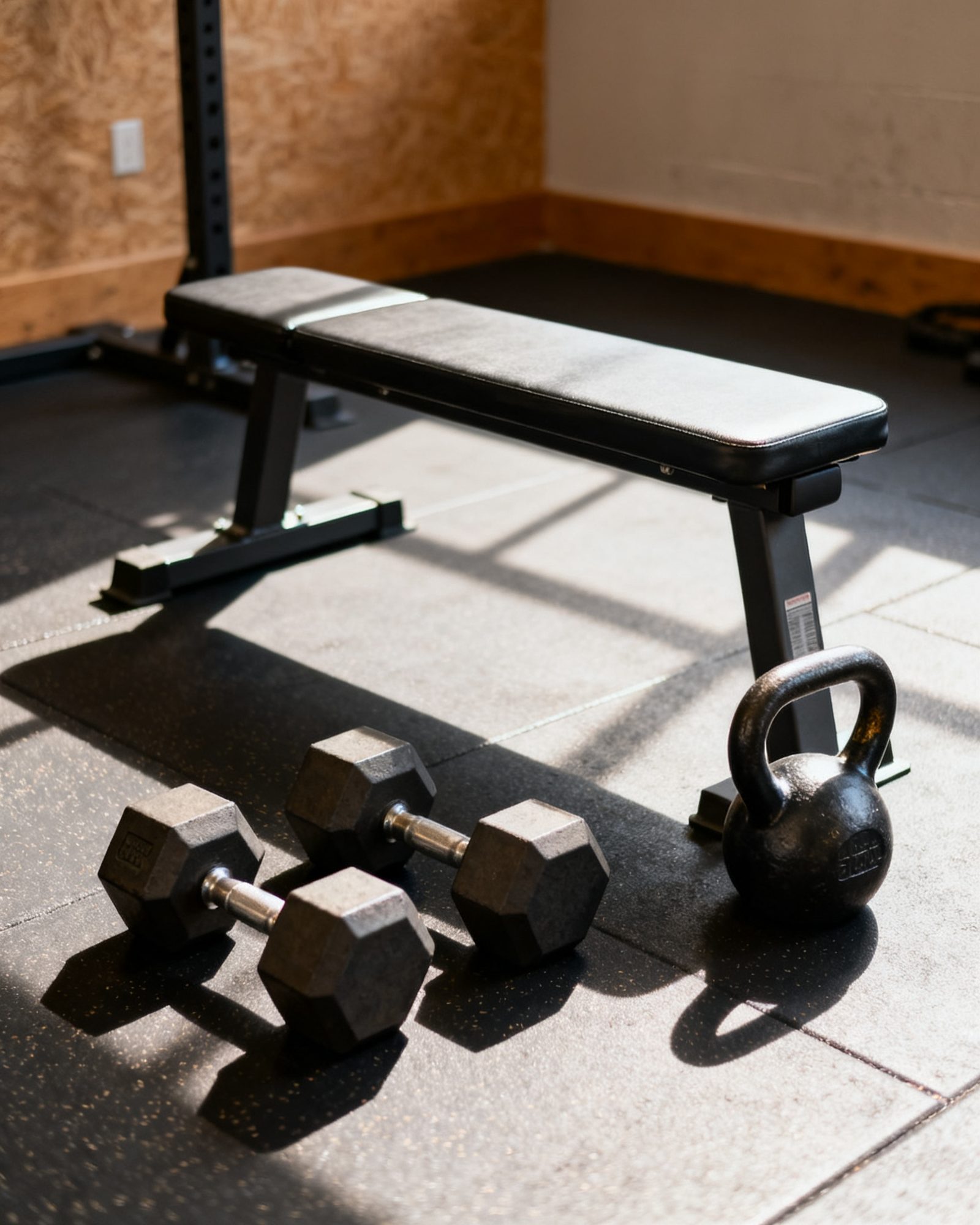
Good lifting form means moving in a way that puts the work on your muscles and keeps your joints in comfortable positions. For the main patterns — squat, hip hinge, push and pull — that comes down to a few things: a stable base, a braced middle, a full range of motion you control, and breathing out on the effort. You do not need to lift heavy to practice it. In fact, learning the movement with a light load first is exactly what strength-training guidance recommends.
This page walks through the cues for each pattern, how to breathe, how to use a mirror or a phone video, and what to do when something feels wrong. It is general guidance for healthy beginners. If you are pregnant, recovering from an injury, in pain, or have a heart or other health condition, talk to your doctor before starting or changing exercise.
The four patterns everything else is built on
Most strength exercises are variations of four movements. Learn these and the machines and classes make more sense.
| Pattern | What it trains | Beginner-friendly version |
|---|---|---|
| Squat | Legs, hips, abdomen | Goblet squat, bodyweight squat to a bench |
| Hinge | Back of the legs, hips, back | Hip hinge with a dowel or broom handle, Romanian deadlift with light dumbbells |
| Push | Chest, shoulders, arms | Push-up against a wall or on the knees, dumbbell press |
| Pull | Back, arms | Dumbbell row, seated cable row |
A balanced week includes some of each. The US Physical Activity Guidelines and ACSM recommend working all the major muscle groups — legs, hips, back, abdomen, chest, shoulders and arms — on 2 or more days a week.
Squat form: sit down and stand up
The squat is a sit-and-stand movement. Stand with feet about hip- to shoulder-width apart, toes slightly out. Take a breath and brace your middle as if you are about to be poked in the stomach. Push your hips back and bend your knees at the same time, as if lowering onto a chair behind you. Keep your chest tall and let your knees travel in line with your toes. Go as low as you can while keeping your heels down and your back comfortable — a bench behind you is a good target at first. Stand by pushing the floor away.
A goblet squat — holding one dumbbell or kettlebell at your chest — is a common way to learn the pattern because the weight in front helps you stay upright. Keep the weight close to your body.
Cues that help
- Spread the floor with your feet to keep your knees from caving in.
- Keep your whole foot planted; do not let the heels lift.
- Let your knees move forward over your toes if that is where they comfortably go.
- Stand all the way up at the top without leaning back.
Hip hinge and deadlift form for beginners
The hinge is the pattern behind a deadlift. It is not a squat: the knees bend only a little and the movement comes from pushing your hips back. Stand tall holding a light dumbbell in each hand in front of your thighs, or hold a broom handle across your back so it touches your head, upper back and tailbone. Soften your knees. Push your hips back and let your chest tip forward, keeping a long, flat back. Stop when you feel a stretch in the back of your thighs, then stand by driving your hips forward.
A Romanian deadlift is a hinge with weights. Keep the weights close to your legs, and stop lowering when your back would have to round to go further. That is your range for today.
Cues that help
- Think “hips back”, not “bend down”.
- Keep your neck in line with your spine; look at the floor a little ahead of you.
- Keep your shoulders pulled down away from your ears.
- If your back rounds, shorten the range or use a lighter weight.
Push: push-ups and dumbbell press
A push-up is a moving plank. Set your hands slightly wider than your shoulders, brace your middle, and lower your chest toward the floor with your body in one line. Press back up. If a full push-up is too hard, do it against a wall or on your knees — both are real push-ups, not a lesser version.
A dumbbell chest press is done lying on your back on a bench (or on the floor). Hold a dumbbell in each hand beside your chest, brace, and press up over your chest until your arms are straight but not locked. Lower with control until your elbows are about level with your chest, or as far as feels comfortable.
Cues that help
- Keep your wrists stacked over your elbows.
- In a push-up, keep your body in one line without letting your hips sag; in a press, keep your lower back from arching high off the bench.
- Breathe out as you press up.
Pull: rows
A row trains the back and arms. For a dumbbell row, place one hand and knee on a bench, keep your back flat, and let the dumbbell hang below your shoulder. Pull it toward your hip, leading with your elbow, then lower it slowly. For a seated cable row, sit tall, brace, and pull the handle toward your lower ribs without leaning back.
Cues that help
- Start the pull by drawing your shoulder blade back, not by yanking with your hand.
- Keep your shoulders away from your ears.
- Lower the weight under control; the way down is part of the exercise.
Lunges: a split-stance squat
Step forward or back into a lunge, lowering until both knees are bent comfortably. Keep your front knee in line with your foot and your torso tall. Push back to standing. If balance is tricky, hold a rail or do a split squat with one hand on a wall.
How to breathe when lifting
The rule is simple: breathe out during the effort and in on the return. For a squat, breathe in as you lower and out as you stand. For a press, out as you push up. Do not hold your breath while lifting. Bracing is not the same as holding your breath — you can brace your middle and still breathe.
Range of motion, tempo and control
Use a full, controlled range of motion that you can own. That means lowering until you feel the target muscles working, not until something pinches. A slow, steady tempo — for example, lowering over a couple of seconds and standing up at a normal pace — teaches control. Correct form comes before adding weight.
Sets and repetitions for form practice
ACSM guidance suggests 8 to 12 repetitions per set for most adults, or 10 to 15 at a lighter effort for older or previously inactive people starting out. Two to four sets improve strength; a single set can be effective for beginners. Rest about 2 to 3 minutes between sets. Train each major muscle group on 2 to 3 days a week, with at least 48 hours between sessions for the same muscle group.
For form practice, keep the effort light enough that the last repetition looks like the first. When you can do one or two repetitions more than your target on consecutive sessions, ACSM suggests raising the load by about 2 to 10 percent.
Using a mirror or a phone video
A mirror in front of you helps with squats and presses; a side view helps with hinges. A phone propped up to record one set can show you what you cannot feel — for example, a back that rounds or knees that drift inward. Watch it once, pick one thing to change, and put the phone away. Do not film other people without asking.
Common faults and fixes
| What you see | What it usually means | Fix |
|---|---|---|
| Heels lift in a squat | Ankle stiffness or weight too far forward | Widen stance slightly, sit back more, or squat to a bench |
| Knees cave inward | Hip control or load too heavy | Lighten the weight and think “spread the floor” |
| Back rounds in a hinge | Range too long or weight too heavy | Shorten the range, lighten the load, practice with a dowel |
| Lower back arches in a press | Middle not braced or weight too heavy | Brace before pressing, reduce the weight, keep ribs down |
| Shoulders shrug in a row | Weight too heavy | Lighten it and pull the shoulder blade back first |
| Holding the breath | Habit or effort too high | Practice breathing out on the effort with a lighter weight |
When to lower the weight or stop
Lower the weight when your form changes in the last few repetitions, when you cannot control the lowering, or when you feel the movement in a joint rather than a muscle. Stop and get advice from a doctor or physiotherapist for sharp or sudden pain, pain in a joint, swelling, or pain that does not ease. Stop exercising and seek medical help for chest pain or pressure, fainting, severe breathlessness or dizziness.
Muscle soreness after unfamiliar exercise is normal. Delayed onset muscle soreness usually begins 12 to 24 hours after exercise, is often worst 24 to 72 hours afterwards, then eases. Gentle movement can help.
Where to get help with form
A mirror, a video and a light weight will take you a long way. If you want hands-on feedback, working with a personal trainer can give you one-to-one coaching; in the US, ask about a current certification from an accredited organisation and about first aid and CPR training. If you are deciding between equipment, free weights vs machines explains which is easier to learn. And if you are still planning your week, strength training for beginners covers where to start.
Common questions
How do I know if my squat form is right?
Your heels stay down, your knees track in line with your toes, your chest stays tall and you can stand up without leaning back. A bench behind you gives a target. If your back rounds or your knees cave in, lighten the load or shorten the range.
What is the difference between a squat and a deadlift?
A squat is a sit-and-stand movement with more knee bend. A deadlift is a hip hinge: the knees bend only a little and the hips push back while the back stays long and flat. Both are worth learning, and both start well with a light weight.
How should I breathe when lifting weights?
Breathe out during the effort and in on the return. For a squat, breathe in as you lower and out as you stand. Do not hold your breath while lifting; you can brace your middle and still breathe.
How many sets and reps should a beginner do?
ACSM guidance suggests 8 to 12 repetitions per set for most adults, or 10 to 15 at a lighter effort when starting out. Two to four sets improve strength, and a single set can be effective for beginners. Rest about 2 to 3 minutes between sets.
Is it normal to be sore after lifting?
Yes. Delayed onset muscle soreness usually begins 12 to 24 hours after unfamiliar exercise, is often worst 24 to 72 hours afterwards, then eases. Sharp or sudden pain, joint pain, swelling or pain that does not ease is not normal soreness: stop and talk to a doctor or physiotherapist.
Read next
Beginner Weekly Workout Plan: 2-Day and 3-Day Strength Schedules
A sample beginner weekly workout plan with 2-day and 3-day full-body strength schedules, sets, reps, rest, warm-up and how to progress safely.
Free Weights vs Machines: Which Should a Beginner Use?
Free weights vs machines for beginners: compare learning curve, safety, stability and results. Learn how to combine both, use a spotter and avoid common mistakes.
Progressive Overload: How to Keep Getting Stronger
Learn what progressive overload means, when to add weight, how double progression works, and how to break a strength plateau with simple, safe steps.