Strength Training for Beginners: Where to Start
New to lifting? Learn the basic movement patterns, how many sets and reps to do, how to choose a starting weight, and how to progress safely without injury.
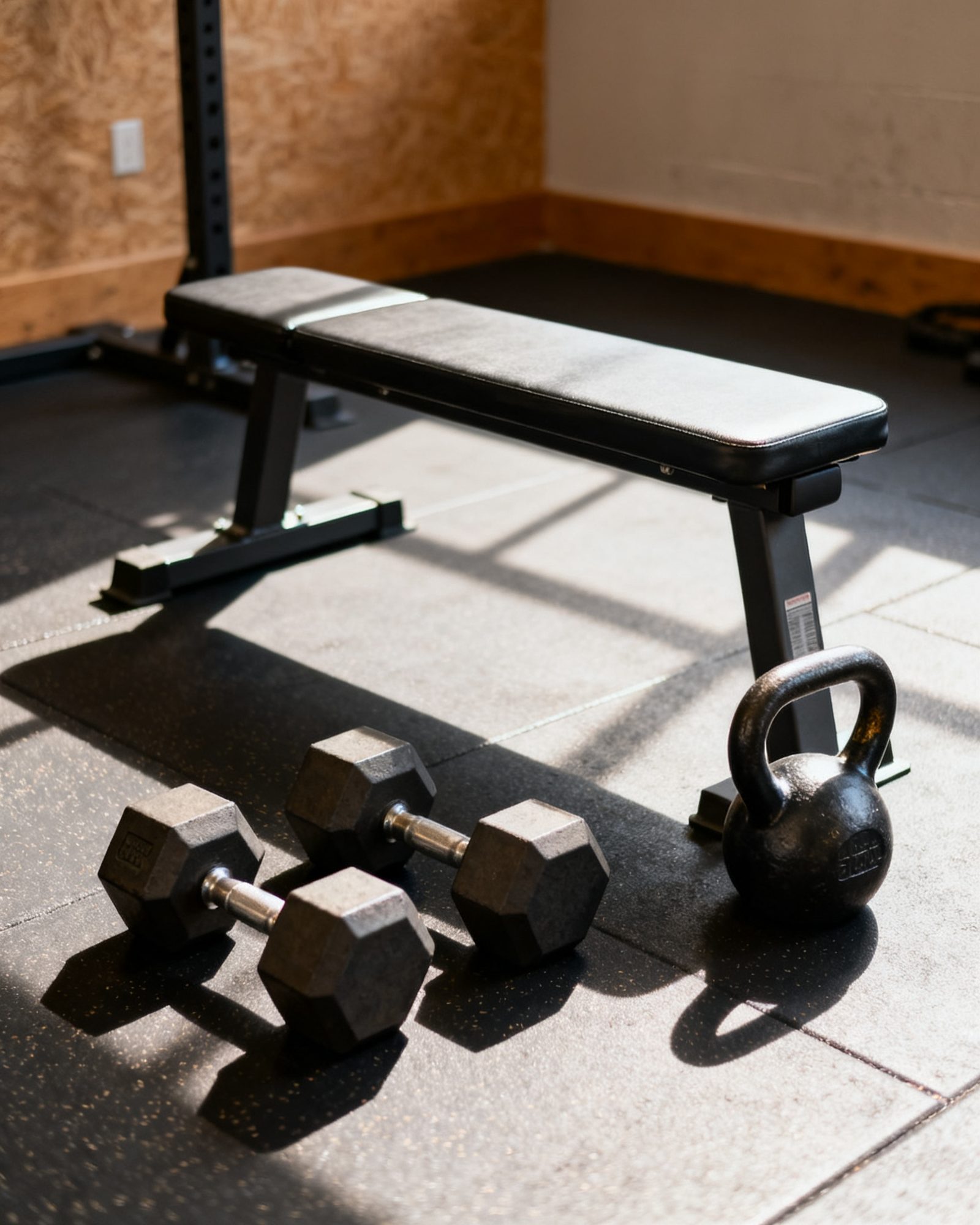
Strength training for beginners is simpler than the gym floor makes it look. The US Physical Activity Guidelines say adults should do muscle-strengthening activities that work all major muscle groups on 2 or more days a week. That is the whole strength target: two sessions a week, covering legs, hips, back, abdomen, chest, shoulders and arms. You do not need a complicated programme or a rack of dumbbells to begin. You need a handful of movements, a light load, and a plan to add a little more over time.
Why the guidelines include strength work
Aerobic activity and strength work do different jobs. The guidelines list muscle-strengthening as a separate recommendation because it loads the muscles in a way that walking and cycling alone do not. The general benefits described by the guidelines are better physical function and fitness over time, and feeling better in the short term. Strength training is not about changing how your body looks; it is about being able to lift, carry, push and pull in daily life with more ease.
The six basic movement patterns
Almost every strength exercise is a version of one of these patterns. Learn one exercise from each and you have a complete, balanced session.
| Pattern | What it looks like | Beginner example |
|---|---|---|
| Squat | Sitting down and standing up | Bodyweight squat, goblet squat with one weight |
| Hinge | Pushing hips back with a flat back | Hip hinge with a broomstick, light deadlift |
| Push | Moving a weight away from the chest | Wall push-up, knee push-up, chest press |
| Pull | Bringing a weight toward the body | Seated row, band row |
| Lunge | Stepping and lowering | Supported split squat, step-up |
| Carry | Walking while holding weight | Farmer carry with light weights |
A session that includes a squat, a hinge, a push, a pull and a carry covers the major muscle groups. You do not need all six every time; rotating them across the week works too.
Equipment: what you actually need
You can start with bodyweight alone. When bodyweight becomes easy, add resistance in whatever form is available: free weights, weight machines, resistance bands, or household objects. Each has trade-offs. Free weights ask more of your balance and coordination; machines guide the path of the movement and are quicker to learn. The comparison of free weights vs machines can help you decide which to try first. Many beginners use machines for the first few weeks and add free weights as confidence grows.
Sets, reps, rest and frequency: the numbers
The ACSM position stands give clear starting points. Use these as your template, not as a test.
| Variable | Beginner guidance |
|---|---|
| Frequency | Each major muscle group 2 to 3 days a week, with at least 48 hours between sessions for the same muscle group |
| Sets | 2 to 4 sets per exercise improves strength; a single set can be effective for beginners and older adults |
| Repetitions | 8 to 12 per set for most adults; 10 to 15 at a lighter effort for older or previously inactive people starting out |
| Rest between sets | About 2 to 3 minutes |
| Tempo | Controlled, full range of motion; breathe out on the effort, in on the return |
A simple beginner session might be two or three sets of five or six exercises, which fits comfortably inside a week with two strength days. If two or three sets feels like too much at first, one set of each exercise is a legitimate starting point, especially in the first couple of weeks.
Choosing a starting load
There is no number to aim for. Choose a load that lets you complete the target repetitions with correct form and a little left in reserve. If you cannot finish the set with good technique, the load is too heavy. If you could do many more repetitions easily, it is too light. Learn each movement with a light load first; correct form and a full, controlled range of motion come before adding weight. The details of squatting, hinging, pushing and pulling safely are covered in lifting form basics.
How to progress without rushing
Progressive overload means gradually asking more of the muscles over time. ACSM suggests raising the load by about 2 to 10 percent once you can lift the current load for one or two repetitions more than your target on consecutive sessions. In practice, that means adding a small amount of weight, or one or two repetitions, when the current work feels manageable. The full picture is in progressive overload. Beginners often find that the first few weeks bring quick improvements in coordination and confidence before the load needs to change at all.
A sample week
Two full-body sessions with a rest day between them is the simplest structure. A sample week might look like this:
- Day 1: squat, push, pull, carry
- Day 2: rest or a walk
- Day 3: hinge, lunge, push, pull
- Rest of the week: walking or other aerobic activity; if you add a third strength day, leave a full day of rest after Day 3 first so the same muscles get at least 48 hours
A beginner strength workout plan sets out sample weekly schedules in more detail, including how to fit strength work around cardio.
Warming up and cooling down
Warm up for at least 5 to 10 minutes at light to moderate intensity before a session, and cool down for at least 5 to 10 minutes afterwards. The warm-up can be as simple as brisk walking or easy cycling, followed by a few repetitions of each movement with no weight. Stretching is most effective when the muscles are warm, so save longer holds for after the session or a separate day.
What goes wrong, and how to avoid it
Lifting too heavy too soon. The most common beginner mistake is adding weight before the movement is learned. Start lighter than you think you need, and add load only when the target repetitions feel controlled.
Holding the breath. Breathe out during the effort and in during the return. Holding your breath while lifting is a warning sign to slow down and reset.
Skipping the warm-up. Cold muscles and a rushed first set make poor form more likely. The warm-up is part of the session, not an optional extra.
Doing too much in the first week. Soreness after unfamiliar exercise is normal and usually eases within a few days. Sharp or sudden pain, pain in a joint, swelling, or pain that does not ease is not normal soreness: stop and talk to a doctor or physiotherapist.
Believing the myths. Strength training is not only for young people or experienced lifters, and it does not require a complicated programme. Strength training for women addresses common myths and gives a sensible starting point.
Training the same muscles on back-to-back days. The guideline of at least 48 hours between sessions for the same muscle group exists so the muscles have time to recover. Alternate upper and lower body, or leave a rest day between full-body sessions.
When to check with a doctor first
If you have a known heart, metabolic or kidney condition, symptoms such as chest pain, unusual breathlessness or dizziness, or you are pregnant, injured or unsure, talk to your doctor before starting a new exercise programme. Questionnaires such as the PAR-Q+ can help you decide whether to check first. Stop exercising and seek medical help for chest pain or pressure, fainting, severe breathlessness or dizziness. This page gives general guidance only and is not medical advice.
The first month in plain terms
Expect the first few sessions to feel awkward. Coordination often improves first, and the movements usually start to feel more natural after a few weeks of regular practice. Keep the load light, keep the repetitions controlled, and add a little only when the current work feels comfortable. Two sessions a week is enough to meet the guideline, and consistency matters more than intensity. If you miss a week, start back at the load you last handled comfortably rather than trying to make up for lost time.
Common questions
How many days a week should a beginner lift weights?
The US Physical Activity Guidelines recommend muscle-strengthening activities on 2 or more days a week, working all major muscle groups. Two full-body sessions with a rest day between them is a simple starting point. Leave at least 48 hours between sessions that train the same muscle group.
How many sets and reps should a beginner do?
ACSM guidance suggests 2 to 4 sets of 8 to 12 repetitions for most adults, or 10 to 15 repetitions at a lighter effort for older or previously inactive people. A single set of each exercise can be effective for beginners. Rest about 2 to 3 minutes between sets.
How do I know what weight to start with?
Choose a load that lets you complete the target repetitions with correct form and a little left in reserve. If you cannot finish the set with good technique, it is too heavy. If you could do many more repetitions easily, it is too light. Learn the movement with a light load before adding weight.
Can I strength train at home without equipment?
Yes. Bodyweight exercises such as squats, lunges, push-ups (including on the knees or against a wall), glute bridges and planks work the major muscle groups. When these become easy, add resistance with bands, free weights or household objects.
Is it normal to be sore after my first strength session?
Yes. Delayed onset muscle soreness usually begins 12 to 24 hours after unfamiliar exercise and is often worst 24 to 72 hours afterwards, then eases. Gentle movement can help. Sharp or sudden pain, joint pain, swelling or pain that does not ease is not normal soreness: stop and talk to a doctor or physiotherapist.
Read next
Beginner Weekly Workout Plan: 2-Day and 3-Day Strength Schedules
A sample beginner weekly workout plan with 2-day and 3-day full-body strength schedules, sets, reps, rest, warm-up and how to progress safely.
Free Weights vs Machines: Which Should a Beginner Use?
Free weights vs machines for beginners: compare learning curve, safety, stability and results. Learn how to combine both, use a spotter and avoid common mistakes.
Proper Lifting Form: Squat, Hinge, Push and Pull
Learn proper lifting form for squats, hip hinges, pushes and pulls. Plain cues, breathing, common faults and fixes, and when to lower the weight or ask a doctor.