How to Warm Up Before Exercise and Cool Down After
Learn how to warm up before exercise and cool down after. Simple routines for home workouts, classes, swimming and the gym, plus common mistakes to avoid.
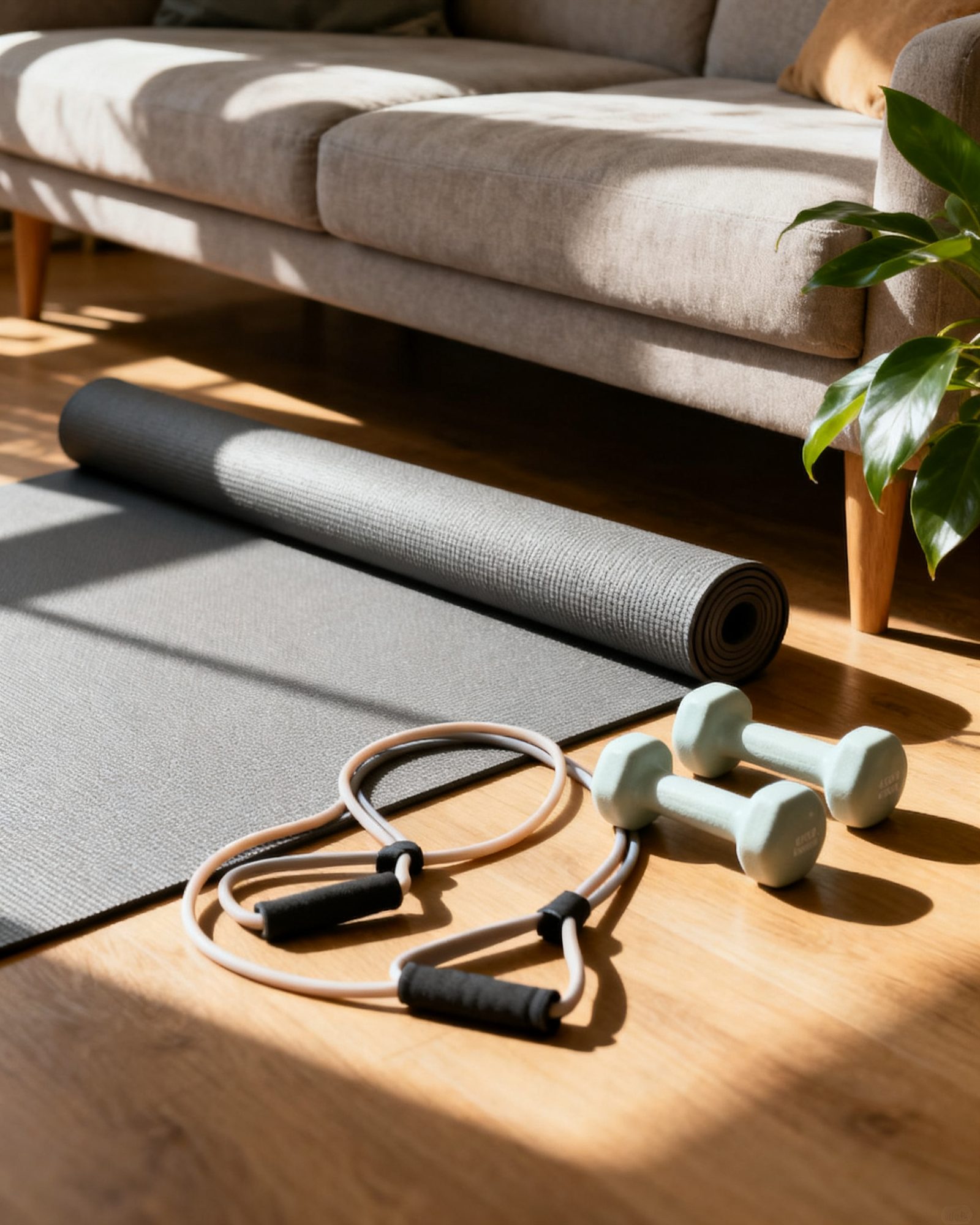
A warm-up is a short block of easy movement and dynamic exercises that raises your heart rate and breathing, warms your muscles and rehearses the movements you are about to do. A cool-down is a few minutes of easy movement and gentle stretching afterwards. Neither needs to be long or complicated: ACSM describes warming up and cooling down as part of a sensible session, and the figures below show how little time it takes.
What the warm-up and cool-down actually do
A warm-up prepares you for the work ahead. It raises your body temperature and heart rate, makes your joints and muscles feel readier to move, and gives you a chance to check in with how you feel before you push. A cool-down helps you come back down gradually: easy movement lets your breathing and heart rate settle, and gentle stretching while the muscles are warm is the best time to work on flexibility.
ACSM recommends warming up for at least 5 to 10 minutes at light to moderate intensity before a session, and cooling down for at least 5 to 10 minutes afterwards. That is the whole time commitment. For most people, a warm-up is simply the first few minutes of the session done more easily, plus a handful of dynamic moves.
The difference between a warm-up and a cool-down
| Warm-up | Cool-down | |
|---|---|---|
| Purpose | Prepare the body for effort | Help the body settle after effort |
| Pace | Building from easy to moderate | Slowing from moderate to easy |
| Main moves | Dynamic: marching, arm circles, leg swings, easy squats | Easy movement, then static stretches |
| Stretching | Dynamic, moving through range | Static holds, 10 to 30 seconds each |
| Length | At least 5 to 10 minutes | At least 5 to 10 minutes |
A simple dynamic warm-up you can do anywhere
Dynamic warm-up means moving through a range of motion rather than holding a stretch. It raises your temperature and wakes up the joints you are about to use. A basic sequence:
- March on the spot or walk briskly for a few minutes.
- Arm circles, forward and back, small then larger.
- Shoulder rolls and gentle neck turns.
- Hip circles and leg swings, holding a wall or chair for balance.
- Bodyweight squats, slow and controlled.
- A few easy lunges or step-backs.
- For upper-body days, add wall push-ups or arm reaches.
Keep it easy. You should finish the warm-up breathing a little faster but still able to talk. If you are doing a home workout, the first round of each exercise can serve as part of the warm-up: do it at half effort before the working rounds. The home workouts for beginners page has more on setting up a simple session at home.
Warming up for different sessions
The warm-up changes with the activity. The table below gives a starting point for common sessions.
| Session | Warm-up | Cool-down |
|---|---|---|
| Gym strength session | 5 to 10 minutes easy cardio (walk, bike, row), then dynamic moves for the joints you will use; ramp-up sets on the first lift | 5 to 10 minutes easy walking or cycling, then static stretches for the muscles you worked |
| Group fitness class | Arrive early and march or walk for a few minutes; the class instructor usually leads a warm-up, so follow it | Stay for the cool-down the instructor gives; add gentle stretches if there is time |
| Swim | A few easy lengths or water walking before faster laps; shoulder circles and gentle arm swings on the poolside | Easy lengths or water walking, then gentle shoulder and back stretches |
| Home workout | March or walk in place, arm circles, hip circles, bodyweight squats; use the first round of each move at half effort | Walk around the room, then stretch the muscles you used |
For strength sessions, ramp-up sets are the bridge between the general warm-up and your working sets. Do the first exercise with a light load for a set or two before your planned sets. This is not the same as a stretching routine: it rehearses the movement pattern and lets you feel the technique. The lifting form basics page covers how to set up the main lifts safely.
The cool-down: easy movement, then stretch
A cool-down has two parts. First, bring your breathing and heart rate down with a few minutes of easy movement: walk, cycle slowly, or move gently through the ranges you used. Second, stretch the muscles you worked while they are still warm.
ACSM’s flexibility guidance: hold a static stretch for 10 to 30 seconds to the point of mild tightness or slight discomfort, never pain. Older adults may benefit from holding for 30 to 60 seconds. Repeat each stretch 2 to 4 times, aiming for about 60 seconds in total per stretch. Flexibility exercises are recommended on at least 2 to 3 days a week. Stretching is most effective when the muscles are warm, which is why the cool-down is a good home for it. The stretching and mobility guide explains how to stretch safely in more detail.
A simple cool-down sequence after a full-body session:
- A few minutes of easy walking or marching.
- Calf stretch, holding a wall.
- Front-of-thigh stretch, holding a chair for balance.
- Chest and shoulder stretch in a doorway.
- Gentle spinal twist, seated or lying down.
- A few slow breaths to finish.
Why the first week feels hard
New movement can leave you sore. Delayed onset muscle soreness, or DOMS, usually begins 12 to 24 hours after unfamiliar or harder exercise and is often worst 24 to 72 hours afterwards, then eases. Gentle movement can help. Soreness is normal at first and lessens as the body adapts. A warm-up and cool-down are not a reliable way to prevent soreness; building up gradually matters more. They do make the session feel more comfortable and give you a routine for checking in with your body.
What goes wrong, and how to avoid it
Skipping the warm-up when you are short on time. Five minutes of marching and arm circles is enough to count. If you truly have less time, make the first part of the session easier rather than starting at full effort.
Static stretching before you are warm. Long holds on cold muscles are not the best use of the pre-exercise minutes. Save static stretches for the cool-down, when the muscles are warm, and use dynamic moves before.
Making the warm-up a workout. The warm-up should leave you able to talk easily. If you are already breathing hard before the first working set, you have done too much.
Skipping the cool-down because you are finished. A few minutes of easy movement and a stretch or two is enough. It also gives you a moment to notice anything that feels off.
Ignoring warning signs. Sharp or sudden pain, pain in a joint, swelling, or pain that does not ease is not normal soreness: stop and talk to a doctor or physiotherapist. Stop exercising and seek medical help for chest pain or pressure, fainting, severe breathlessness or dizziness. If you have a known heart, metabolic or kidney condition, symptoms such as chest pain or unusual breathlessness, or you are pregnant, injured or unsure, talk to your doctor before starting a new exercise programme.
Making it a habit
The warm-up and cool-down are part of the session, not an extra. Put them in your plan: write “warm-up” as the first line and “cool-down” as the last. At home, keep a chair or wall nearby for balance during leg swings and stretches. In a class, arrive a few minutes early and stay for the end. In the pool, use the first easy lengths as your warm-up and the last as your cool-down. Over time, the routine becomes automatic, and the minutes you spend on it make the rest of the session feel better.
Common questions
How long should a warm-up be?
ACSM recommends at least 5 to 10 minutes at light to moderate intensity. For most sessions, a few minutes of easy movement plus some dynamic moves for the joints you will use is enough.
Should I stretch before or after exercise?
Dynamic moves are best before exercise, and static stretches are best after, when the muscles are warm. Hold a static stretch for 10 to 30 seconds to mild tightness, never pain.
What is a dynamic warm-up?
A dynamic warm-up moves your joints through their range rather than holding a stretch. Examples are arm circles, leg swings, marching on the spot and bodyweight squats. It raises your heart rate and prepares the muscles you are about to use.
Do I need to cool down after every workout?
A cool-down of at least 5 to 10 minutes of easy movement and gentle stretching helps you settle after exercise and is a good time to work on flexibility. It does not need to be long or complicated.
Can I warm up with the first part of my workout?
Yes. Doing the first few minutes of your session at an easier pace, or using the first round of each exercise at half effort, can serve as a warm-up. For strength work, add a ramp-up set with a light load before your first working set.
Read next
Home Workouts for Beginners: No Gym Needed
Start home workouts for beginners with no equipment. Learn bodyweight moves, a sample session, safety tips, and how to progress at your own pace.
Home Workout Equipment: What's Worth Having
A plain guide to home workout equipment for beginners: which mat, bands, dumbbells and step are worth having, what each adds, and what to skip.
Rest Days and Recovery: Soreness, Sleep and Listening to Your Body
How many rest days you need, what muscle soreness after a workout means, how DOMS works, and how sleep and active recovery help you train at home.