Moderate Intensity Exercise: Talk Test and Heart Rate Zones
How hard cardio should feel: the talk test, the Borg exertion scale and CDC target heart rate ranges for moderate and vigorous exercise.
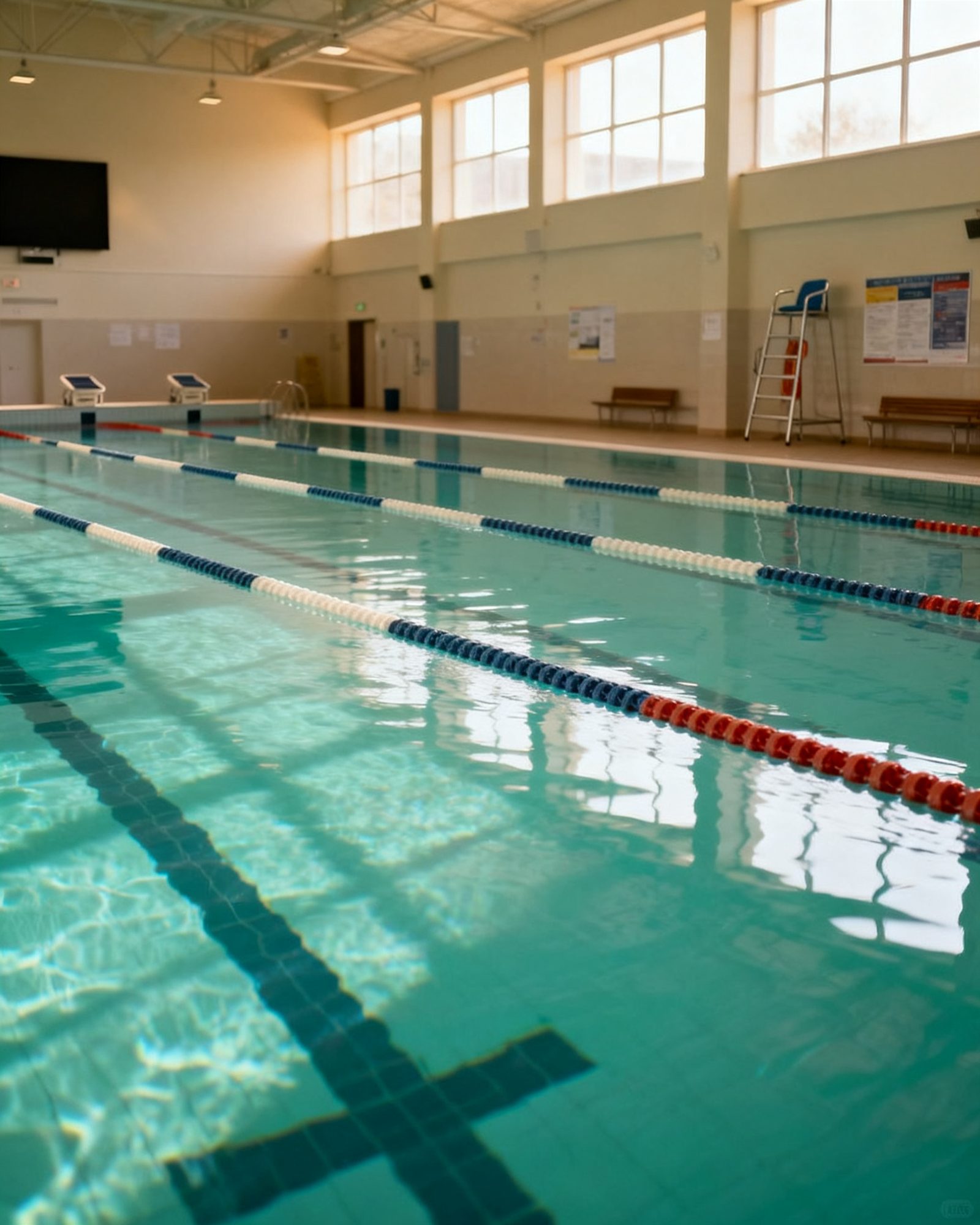
Moderate intensity exercise is the pace at which you can talk but not sing. That simple test, the talk test, is the most practical way to judge how hard you are working during swimming, water aerobics, walking or any cardio machine. For most adults, the goal is at least 150 to 300 minutes a week of moderate-intensity aerobic activity, or 75 to 150 minutes a week of vigorous activity, or a mix of both, according to the US Physical Activity Guidelines. This page explains how to use the talk test, perceived exertion and heart rate to find the right effort for you.
The talk test: your built-in effort gauge
The talk test is exactly what it sounds like. During moderate-intensity activity, you are breathing faster and your heart is beating faster, but you can still speak in full sentences. You can talk, but not sing. During vigorous-intensity activity, you are breathing hard and fast, and you cannot say more than a few words without pausing for a breath.
The talk test works for any cardio: swimming laps, walking on a treadmill, using an elliptical, or taking a water aerobics class. It needs no equipment and adjusts automatically to your fitness level and how you feel on the day. If you are new to exercise, start with activity that lets you talk comfortably and build from there.
Perceived exertion and the RPE scale
Another way to judge effort is the Borg scale, also called the rating of perceived exertion (RPE). It runs from 6 to 20. A rating of 12 to 14 suggests moderate intensity. On this scale, 6 means no exertion at all and 20 means maximal effort. You simply ask yourself how hard the activity feels, and pick a number.
The RPE scale is useful because it accounts for everything you feel: breathing, heart rate, muscle fatigue and overall effort. The same activity can be moderate for one person and vigorous for another, and your own perception can change from day to day. The talk test and RPE often agree, so use whichever is easier for you.
Target heart rate: a numbers-based guide
Heart rate is another way to gauge intensity. The CDC gives a simple formula for estimated maximum heart rate: 220 minus your age. For moderate intensity, aim for 64% to 76% of that maximum; for vigorous intensity, 77% to 93%.
Here is the CDC’s example for a 50-year-old:
| Measure | Value |
|---|---|
| Estimated maximum heart rate | 170 beats per minute (bpm) |
| Moderate-intensity range (64%–76%) | about 109 to 129 bpm |
| Vigorous-intensity range (77%–93%) | about 131 to 158 bpm |
To use this, you need to know your age and be able to take your pulse or use a heart rate monitor. Many watches and fitness trackers show heart rate, but they are not always accurate. If you use one, treat the number as a guide, not a rule. The talk test is a simple check that needs no device, which makes it a good starting point for beginners.
Heart rate varies from person to person, and some medicines (such as beta-blockers) can lower it. If you take medication or have a heart condition, ask your doctor what target range is right for you. This page gives general information only and is not medical advice.
Moderate vs vigorous: what counts as what
The CDC lists examples of moderate-intensity activity: walking briskly (2.5 mph or faster), water aerobics, bicycling slower than 10 mph on level ground, doubles tennis, ballroom dancing and general gardening. Vigorous-intensity examples include jogging or running, swimming laps, bicycling 10 mph or faster, singles tennis, jumping rope, hiking uphill or with a heavy backpack, and aerobic dancing.
Notice that swimming laps is vigorous, while water aerobics is moderate. In the pool, you can adjust effort by changing your pace, using equipment for support, or taking more rest. For more on low-impact options, see low-impact cardio: elliptical, bike, rower and walking.
How the weekly minutes add up
One way to reach 150 minutes is 30 minutes a day, 5 days a week. The 2018 guidelines dropped the old rule that activity had to come in bouts of at least 10 minutes: activity of any length counts toward the weekly total. So a short swim, a brisk walk or a few minutes on a cardio machine all add up.
The NHS guidance for adults aged 19 to 64 recommends at least 150 minutes of moderate activity or 75 minutes of vigorous activity a week, strengthening activities on at least 2 days a week, spreading exercise evenly over 4 to 5 days a week or every day, and reducing time spent sitting. For a full breakdown, see how much exercise do you need? The guidelines in plain words.
If you are doing vigorous activity, you can count it double: 75 minutes of vigorous activity is equivalent to 150 minutes of moderate. But you do not have to do vigorous activity to get health benefits: moderate activity alone can meet the guideline.
Using a watch or going by feel
Watches and fitness trackers can show heart rate, but they are not essential. The talk test and RPE scale are free and always available. If you do use a watch, remember that wrist-based heart rate can be less accurate during swimming or when you are moving your arms a lot. A chest strap may be more reliable, but it is not necessary for most people.
Some people find numbers motivating; others find them distracting. Either way, the talk test is a good backup. If you are breathing hard but can still speak in short sentences, you are probably near the top of moderate. If you cannot say more than a few words without pausing for a breath, you are working vigorously.
What goes wrong: common mistakes and warning signs
One common mistake is starting too hard. Beginners often think they need to be breathless to get a good workout, but moderate intensity is enough to improve fitness. Start below your limit and increase gradually. Inactive people should begin with lighter activity and build up the amount and intensity over weeks and months.
Another mistake is ignoring warning signs. Stop exercising and seek medical help for chest pain or pressure, fainting, severe breathlessness or dizziness. Sharp or sudden pain, pain in a joint, swelling, or pain that does not ease is not normal soreness: stop and talk to a doctor or physiotherapist. Muscle soreness after unfamiliar exercise is normal and usually eases within a few days.
A third mistake is relying only on a heart rate monitor. Heart rate can be affected by things such as heat and some medicines, and wrist readings are not always accurate. If the number on your watch does not match how you feel, trust how you feel. And if you have a known heart, metabolic or kidney condition, or you are pregnant, injured or unsure, talk to your doctor before starting a new exercise programme.
Making it easier or harder
To make cardio easier, slow down, take rest breaks, or choose lower-impact options like water aerobics or walking. To make it harder, increase your pace, add incline or resistance, or try intervals. HIIT (high-intensity interval training) alternates short periods of hard effort with rest or easy movement. It is demanding; beginners should build a base of regular moderate activity first. For more, see HIIT for beginners: what high-intensity interval training involves.
In the pool, you can adjust intensity by swimming faster, using hand paddles (if you are experienced), or reducing rest between laps. But remember that swimming laps is already vigorous for most people. Water aerobics is moderate and easier to sustain for longer.
Warm-up and cool-down
Warm up for at least 5 to 10 minutes at light to moderate intensity before a session, and cool down for at least 5 to 10 minutes afterwards. This lets your body ease into the effort and back down from it. Stretching is most effective when the muscles are warm, so save static stretches for after your cool-down.
When to ask your doctor
If you are pregnant, postpartum, injured, or have a heart condition or any health condition, ask your doctor before starting or changing exercise. This page gives no programme for those situations. Also talk to your doctor if you take medicines that affect heart rate, or if you are unsure whether exercise is safe for you. Questionnaires such as the PAR-Q+ can help you decide whether to check with a doctor first.
Common questions
What is the talk test and how do I use it?
The talk test is a simple way to gauge exercise intensity. If you can talk in full sentences but not sing, you are at moderate intensity. If you can only say a few words before pausing for breath, you are at vigorous intensity.
What is the RPE scale for exercise?
The RPE scale, or Borg scale, runs from 6 to 20 and measures how hard you feel you are working. A rating of 12 to 14 suggests moderate intensity. It is a useful alternative to heart rate monitoring.
How do I calculate my target heart rate?
The CDC formula for estimated maximum heart rate is 220 minus your age. For moderate intensity, aim for 64% to 76% of that maximum; for vigorous, 77% to 93%. For example, a 50-year-old has an estimated maximum of 170 bpm, with a moderate range of about 109 to 129 bpm.
Does swimming count as moderate or vigorous exercise?
Swimming laps is listed by the CDC as vigorous activity, while water aerobics is moderate. You can adjust effort by changing your pace or taking rest breaks.
Can I do short bouts of exercise and still meet the guidelines?
Yes. The 2018 US Physical Activity Guidelines dropped the rule that activity had to last at least 10 minutes. Activity of any length counts toward your weekly total.
Read next
Water Aerobics for Beginners: What to Expect in the Pool
Water aerobics is a moderate-intensity class in the pool. Learn what happens, what to wear, how it feels, and how to start with confidence.
How Much Exercise Do You Need? Guidelines in Plain Words
The US and NHS activity guidelines in plain words: how many minutes a week, how hard, how to count any activity, and how to build up from little or nothing.
Low Impact Cardio: Elliptical, Bike, Rower and Walking
Compare low impact cardio options like walking, elliptical, stationary bike, rowing and swimming. Learn safe machine setup, session structure and weekly mixing.