How to Use Gym Machines: A Beginner's Guide to the Weights Floor
New to the weights floor? Learn how to set up and use common gym machines, choose a starting weight, and avoid beginner mistakes with confidence.
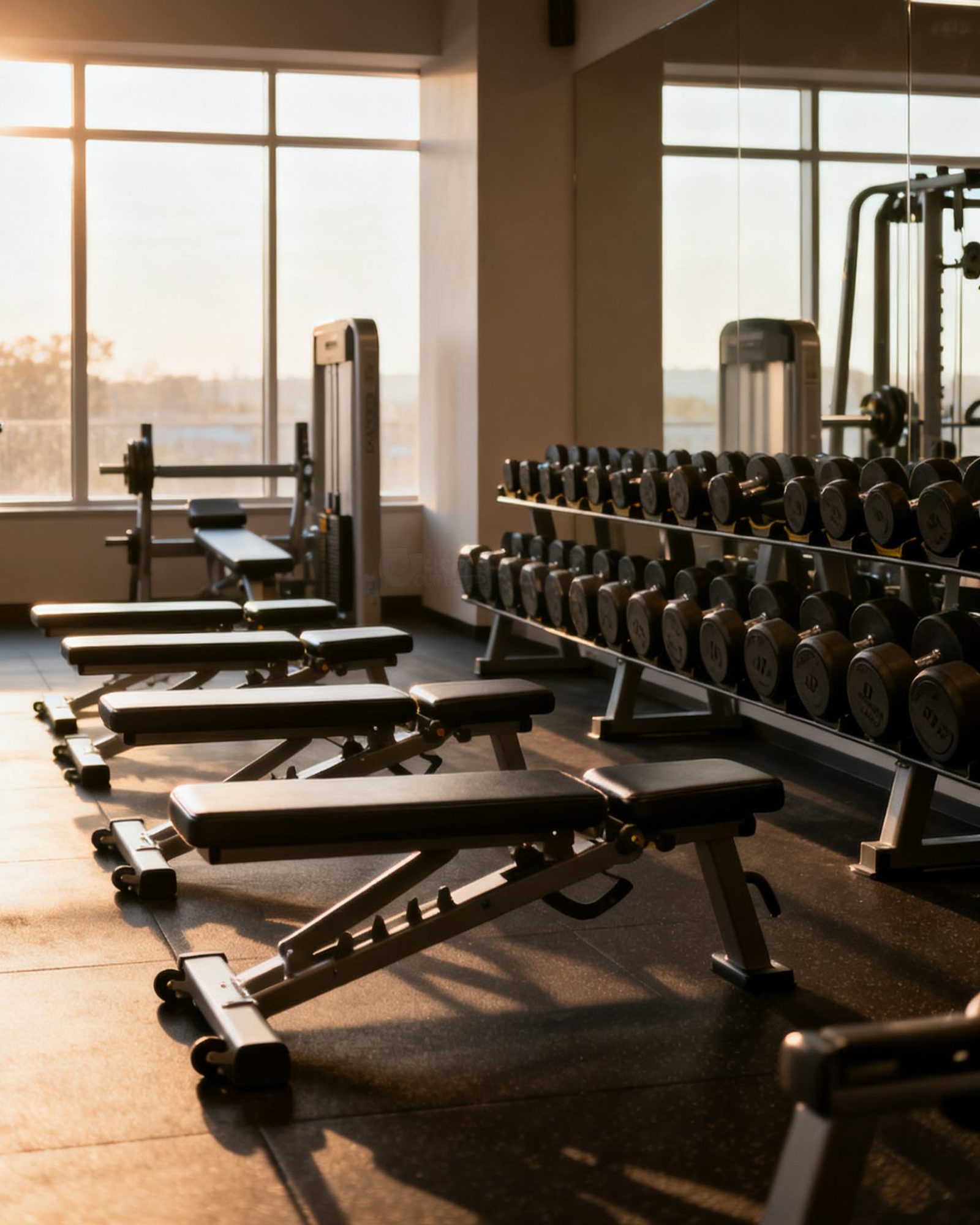
Gym machines are the most approachable way to start strength training. Each machine guides your movement along a fixed path, so you don’t need to balance a barbell or learn a complex lift on day one. You adjust the seat, choose a light weight, and follow the picture on the instruction plate. This guide explains how a machine works, how to set it up for your body, what the common machines do, and the mistakes that trip up beginners.
How a weight machine works
Most machines on the weights floor share the same parts:
- Weight stack and pin: A column of rectangular plates. You push a metal pin into the hole that matches the weight you want. Start with the lightest plate or the one just above it.
- Seat and back pad: Adjust these so the machine’s pivot point lines up with your joint. The instruction plate usually shows where the seat should sit.
- Range-of-motion settings: Many machines have a lever or pin that sets how far the arm or leg press travels. Set it so you can move through a comfortable, full range without straining.
- Instruction plate: A sticker on the machine showing the starting position, the direction of movement, and which muscles the exercise works. Read it before you touch the pin.
Setting up a machine for your body
- Adjust the seat height so the handle or pad sits at the right level for your joint. For a chest press, the handles should line up with your mid-chest. For a leg extension, your knee should align with the machine’s pivot point.
- Set the range-of-motion pin so you can move smoothly without locking your joints or feeling a pinch.
- Select a light weight. You can always add more after the first set.
- Sit tall, keep your back against the pad, and place your feet flat on the floor or the footplate.
- Breathe out as you push or pull, and in as you return. Do not hold your breath.
Common machines and what they work
| Machine | Main muscles worked | Setup tip |
|---|---|---|
| Leg press | Legs (quadriceps, hamstrings, glutes) | Feet flat on the platform, shoulder-width apart; lower until knees are bent comfortably, then press without locking knees. |
| Leg extension | Front of thighs (quadriceps) | The pad rests on your shins just above the ankles; the knee joint lines up with the machine’s pivot. |
| Leg curl | Back of thighs (hamstrings) | The pad sits just above your heels; lie face down or sit, depending on the machine. |
| Chest press | Chest, shoulders, triceps | Handles at mid-chest height; press forward without letting your shoulders roll forward. |
| Lat pulldown | Back (latissimus dorsi), biceps | Thigh pad snug over your legs; pull the bar to your upper chest, not behind your neck. |
| Seated row | Upper back, biceps | Chest against the pad; pull the handles toward your waist, squeezing your shoulder blades together. |
| Shoulder press | Shoulders (deltoids), triceps | Handles at shoulder height; press overhead without arching your lower back. |
| Cable station | Many options (arms, back, core) | Adjust the pulley height and attach the handle; stand or kneel with a stable base. |
Cardio machines such as the treadmill, elliptical, stationary bike, and rower are covered in the guide to low-impact cardio options. They are a good warm-up before strength work.
Choosing a starting weight
Start with a weight that lets you complete the repetitions with good form and feel like you could do a few more. The instruction plate often suggests a starting range, but your own sense of effort matters more. For most adults, 8 to 12 repetitions per set improve strength; if you are older or have been inactive, 10 to 15 repetitions at a lighter effort is a good place to begin. Do 2 to 4 sets of each exercise, resting about 2 to 3 minutes between sets. A single set can be effective for beginners, so start with one or two sets and add more as you get comfortable.
Use progressive overload: when you can lift the current weight for one or two repetitions more than your target on consecutive sessions, increase the load by about 2 to 10 percent. On a weight stack that usually means moving the pin one plate down, the smallest step most stacks allow; if that jump feels too big, add a repetition or two first. Small steps add up.
How to structure your first machine session
- Warm up for at least 5 to 10 minutes at light to moderate intensity, for example on a bike or elliptical.
- Choose 3 to 5 machines that cover different muscle groups: legs, back, chest, shoulders, and arms.
- Do one set on each machine with a light weight to learn the movement, then add sets as you feel ready.
- Rest about 2 to 3 minutes between sets on the same machine.
- Cool down for at least 5 to 10 minutes with easy movement and a few gentle stretches.
Train each major muscle group on 2 to 3 days a week, with at least 48 hours between sessions for the same muscle group. The major muscle groups are the legs, hips, back, abdomen, chest, shoulders, and arms.
Machines vs. free weights
Machines are not better or worse than free weights; they are a different tool. Machines guide the path, which makes them easier to learn and good for isolating a muscle. Free weights ask more of your balance and coordination. Many beginners start with machines and add free weights later. For a closer look, see free weights vs machines.
Using the cable machine for beginners
The cable station is a versatile machine with a pulley that moves up and down. To use it:
- Adjust the pulley to the height you need and attach the handle.
- Select a light weight on the stack.
- Stand with feet shoulder-width apart and a slight bend in your knees.
- Keep your wrists straight and move smoothly, controlling the weight back to the start.
Common beginner exercises include cable rows, triceps pushdowns, and face pulls. Start light and focus on a steady, controlled motion.
What goes wrong on the weights floor
- Using too much weight too soon. If you have to swing or jerk the weight, it is too heavy. Drop the pin down a plate or two and focus on form.
- Skipping the setup. A seat that is too high or low puts your joints in an awkward position. Take the extra minute to adjust.
- Holding your breath. Breathe out during the effort and in on the return. Holding your breath can make you dizzy.
- Letting the weight slam down. Control the return phase; a slow, steady return is part of the exercise and keeps the movement safe.
- Doing only the machines you know. A balanced program works all major muscle groups. Ask a staff member to show you a new machine if you are unsure.
- Ignoring pain. Muscle soreness after unfamiliar exercise is normal and usually begins 12 to 24 hours later, often worst 24 to 72 hours afterwards. Sharp or sudden pain, joint pain, or pain that does not ease is not normal soreness: stop and talk to a doctor or physiotherapist.
When to ask for help
If you are unsure how to adjust a machine or which weight to use, ask a staff member. Many gyms offer an orientation. A personal trainer can plan a program and check your form; see working with a personal trainer for what to expect. Before you start, if you have a known heart, metabolic, or kidney condition, are pregnant, injured, or have symptoms such as chest pain, unusual breathlessness, or dizziness, talk to your doctor first.
Etiquette and confidence on the floor
- Wipe down machines after use with the gym’s cleaning supplies.
- Re-rack weights and pins when you finish.
- It is fine to ask to share a machine between sets; most people are friendly about it.
- Go at a quiet time if you feel nervous. The weights floor is for everyone, not just experienced lifters.
Learning good form on the basic movements will serve you on machines and beyond. The guide to lifting form basics covers squat, hinge, push, and pull patterns safely.
Common questions
How do I adjust a gym machine for my height?
Start with the seat height so the machine's pivot point lines up with your joint. For a chest press, the handles should be at mid-chest. For a leg extension, your knee should align with the pivot. The instruction plate usually shows the correct setup.
What weight should a beginner use on gym machines?
Choose a weight that lets you complete 8 to 12 repetitions with good form and feel like you could do a few more. If you are older or have been inactive, 10 to 15 repetitions at a lighter effort is fine. Start with the lightest plate and add weight gradually.
How many sets and reps should I do on each machine?
For most adults, 2 to 4 sets of 8 to 12 repetitions improve strength. A single set can be effective for beginners, so start with one or two sets and build up. Rest about 2 to 3 minutes between sets.
Is it okay to use machines instead of free weights?
Yes. Machines are a good starting point because they guide the movement and help you learn the pattern. Many beginners start with machines and add free weights later. Both are effective for strength.
What should I do if a machine feels painful?
Stop the set. A pinch or awkward feeling often comes from the setup, so check the seat and range of motion and ask a staff member to look at it. Do not push through pain with a lighter weight or a different machine: sharp or sudden pain, joint pain, or pain that does not ease is not normal soreness, so stop and talk to a doctor or physiotherapist.
Read next
How to Choose a Gym: What to Check Before You Join
A practical guide to choosing a gym: what to check on a tour, questions to ask, how to read a membership contract, and how to compare gym types without pressure.
Gym Anxiety: How to Feel at Ease as a Beginner
Nervous about the gym? Practical ways to feel calmer as a beginner: quieter times, a simple plan, inductions, headphones, and what to do if anxiety feels heavy.
Gym Etiquette for Beginners: The Unwritten Rules
New to the gym? Learn the unwritten rules of gym etiquette, from wiping equipment to sharing machines, so you feel confident and respectful on every visit.